Running a small business already involves enough moving parts without having to piece together three different services just to take a payment, wait for the money to arrive and then actually use it.
That is the appeal of myPOS. It combines card machines, online payment tools, an e-money business account and a business debit card in one system, with no standard monthly account fee and instant settlement of card payments into the myPOS account. For a café, beauty business, market trader, independent shop or freelancer taking payments regularly, that is a fairly compelling setup.
There is one distinction worth making straight away, though: myPOS is not a traditional business bank account. Its UK account is an e-money account provided by an FCA-regulated electronic money institution. That does not make it less useful, but it does mean businesses should understand what they are opening rather than assuming it works exactly like an account at a high-street bank.
For this myPOS review, we examined the current UK product range, transaction fees, account and card conditions, online payment tools, card machines, support options and publicly available customer feedback.
How We Evaluated myPOS
With payment services, the shiny terminal is only one part of the story.
We looked at what happens around the payment as well: how much a business pays to accept it, how quickly the money becomes available, what equipment is required, whether there are fixed monthly charges, what online options exist and what happens if you stop using the service for a while.
We also checked myPOS’s UK regulatory information and its customer feedback. At the time of our review, myPOS had a 4.2/5 TrustScore from more than 21,000 reviews on Trustpilot. Feedback is broadly positive around ease of setup, staff and day-to-day use, although some customers also describe frustrations involving verification, support and account restrictions.
You can see the current feedback directly on myPOS’s Trustpilot profile.
What Is myPOS?
myPOS is a fintech payment platform designed for businesses that need to accept and manage customer payments.
The UK service is provided by myPOS Payments Ltd, which is authorised and regulated by the Financial Conduct Authority as an electronic money institution under reference number 900826.
Rather than offering only a card reader, myPOS builds several tools around the same account: physical card machines, Tap to Pay from a compatible phone, online checkout and payment links, a multi-currency e-money business account, a business Mastercard, and payment and sales management through the myPOS app.
The practical advantage is that these services talk to each other. When a customer pays through a myPOS terminal, online checkout or payment link, myPOS says the funds are settled into the merchant account within seconds rather than being paid out several days later.
For a business that regularly finds itself checking whether yesterday’s card takings have finally landed, that immediate access is probably one of the most interesting parts of the service.
The myPOS Business Account
The account sits at the centre of the myPOS setup.
It is a multi-currency e-money account with a UK IBAN, rather than a conventional bank current account. myPOS currently says there is no setup fee, monthly service fee or annual account fee. Businesses can manage payments, sales, card machines and payment cards through the online platform or app.
You can also make bank transfers, hold several currencies, add account users and download statements for bookkeeping.
The distinction between a bank account and an e-money account matters here. Electronic money institutions are required to safeguard relevant customer funds under UK rules, but the protection model is different from keeping money in a conventional bank deposit.
What We Like About the Account
The lack of a standard monthly fee makes myPOS particularly attractive if card payments are the main reason you need the service.
We also like that the account is not treated as a completely separate product from the payment terminals. Card takings arrive there immediately, which means you can use the same funds with the associated business card rather than waiting for a scheduled payout into another account.
What to Consider
“Free account” does not mean every action is free.
For example, the current tariff lists a £1.50 fee for an outgoing GBP bank transfer and £4 for a SEPA transfer. There are also charges attached to certain less common actions and exceptional situations.
This is one area where we would definitely look at your own habits before switching. If you regularly move money from your payment account into another bank account, transfer fees matter more than they would for a business that spends directly from its myPOS card.
myPOS Card Machines
The card-machine range is one of myPOS’s stronger points because it covers several genuinely different types of business rather than offering the same reader in slightly different colours.
All of the main devices are standalone, and myPOS includes Wi-Fi plus a built-in SIM with mobile data. That means you do not necessarily need to pair a terminal with your own phone every time somebody wants to pay.
myPOS Go 2 – Best for Small and Mobile Businesses
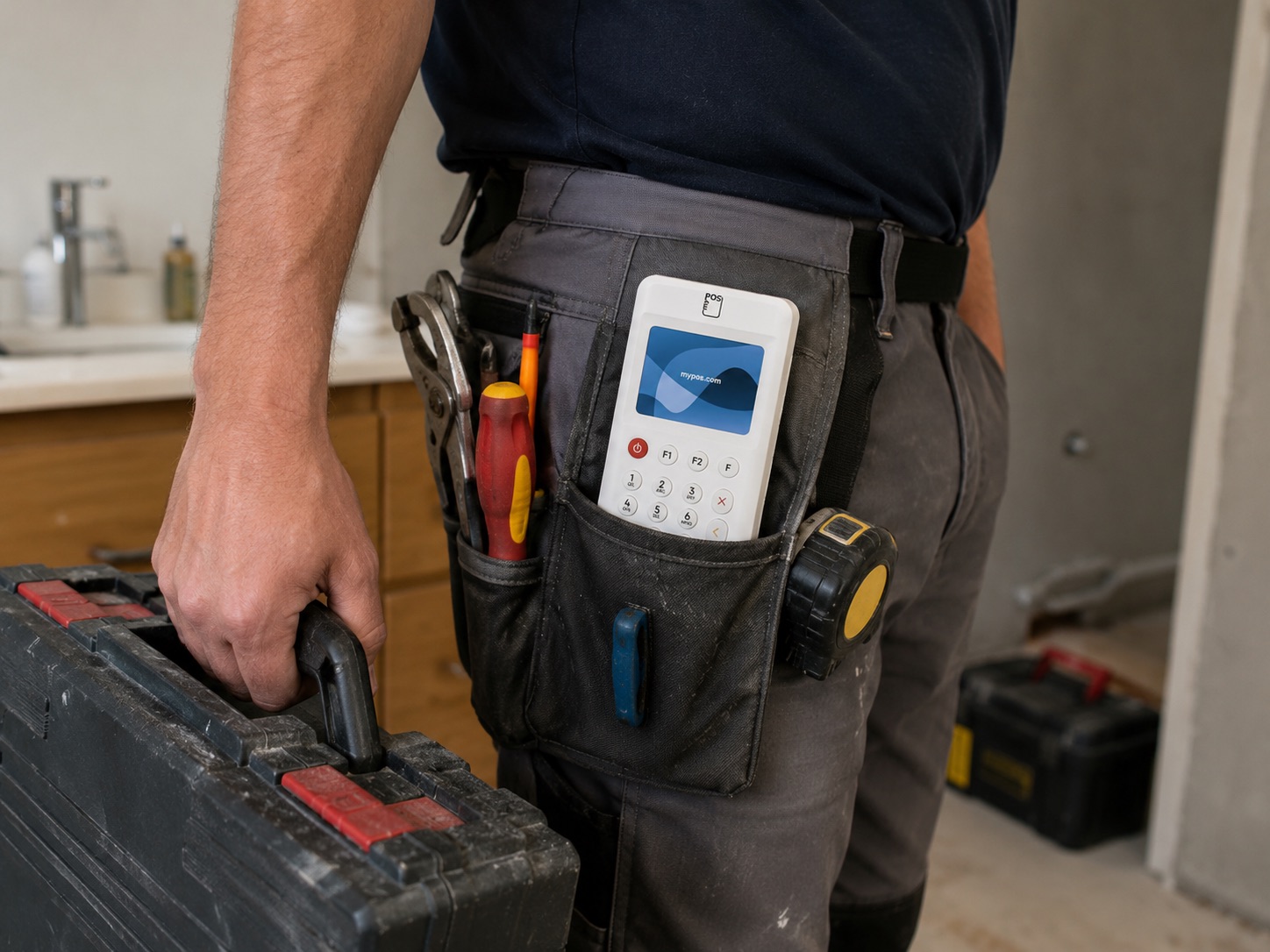
It is the simplest standalone terminal in the range and does not need a smartphone connection. It can send receipts by SMS or email and myPOS says the battery supports more than 1,000 transactions on a charge.
Best for: market traders, mobile services, small shops, tradespeople and businesses wanting a low-cost first terminal.
Why it stands out: the upfront cost is low and it works independently rather than relying on a separate phone.
What to consider: there is no built-in receipt printer, so businesses where customers regularly ask for paper receipts may prefer another device.
Price: myPOS Go 2 – £29
myPOS Flex – Best for a More Modern Handheld Setup
It sits between a very basic card reader and the larger smart terminals. It is compact enough to carry around but gives businesses access to functions such as sales data, tips and refunds directly from the device.
Best for: cafés, restaurants, salons and small retailers that want more control on the terminal itself without spending heavily on hardware.
Why it stands out: it offers a smarter interface while remaining relatively inexpensive.
What to consider: if you only need to take simple contactless payments, the cheaper Go 2 may already do everything necessary.
Price: myPOS Flex – £59
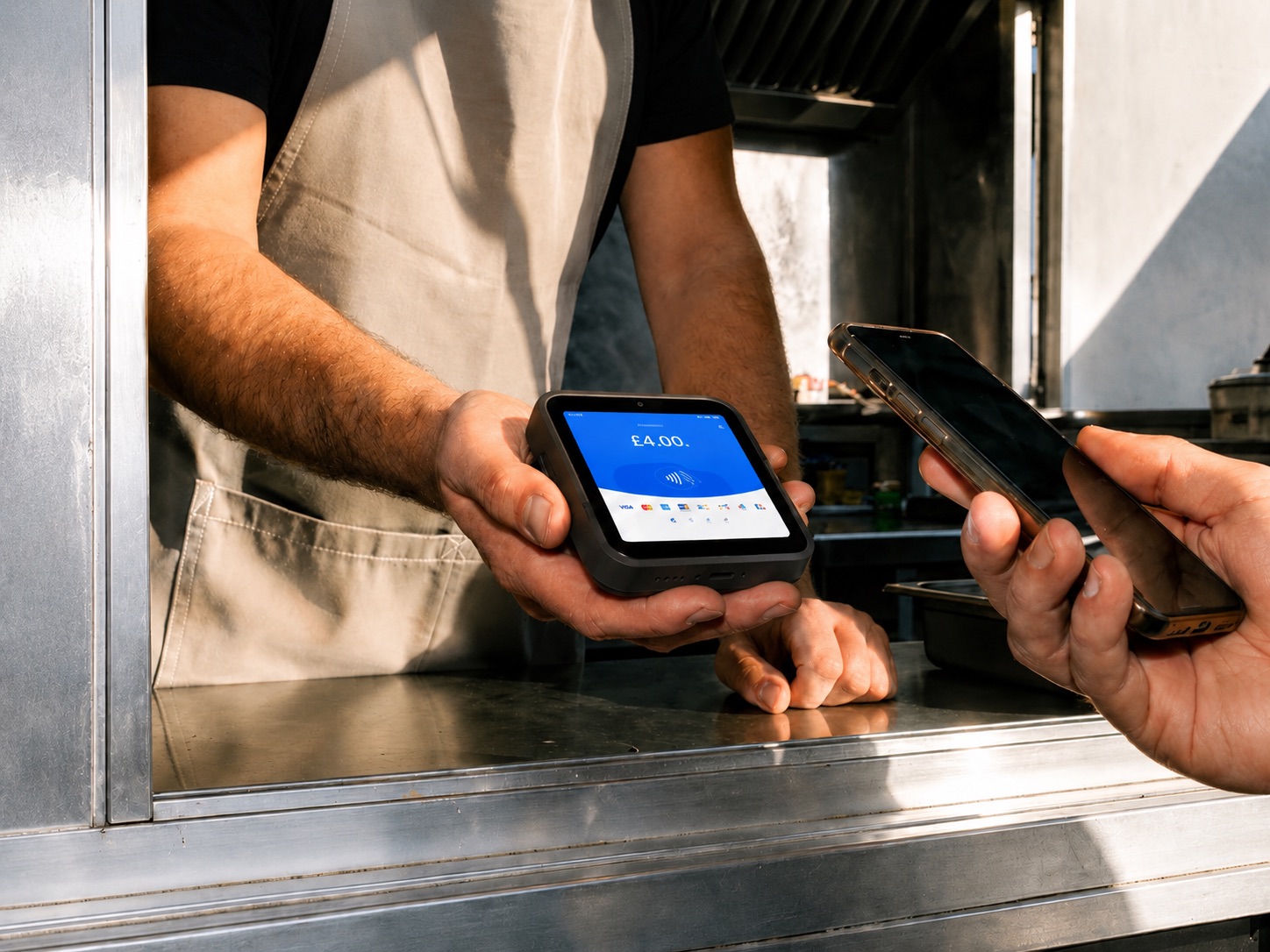
myPOS Go Combo – Best if You Want Printed Receipts
The myPOS Go Combo pairs the portable Go 2 reader with a charging and printing dock.
You can take the reader away from the counter when needed, then dock it to charge and print receipts.
Best for: small shops, cafés and service businesses that want a portable reader but still use paper receipts.
Why it stands out: it bridges the gap between a pocket-sized terminal and a fixed countertop machine.
What to consider: the jump from £29 for the Go 2 to £169 is significant if receipt printing is only an occasional requirement.
Price: myPOS Go Combo – £169
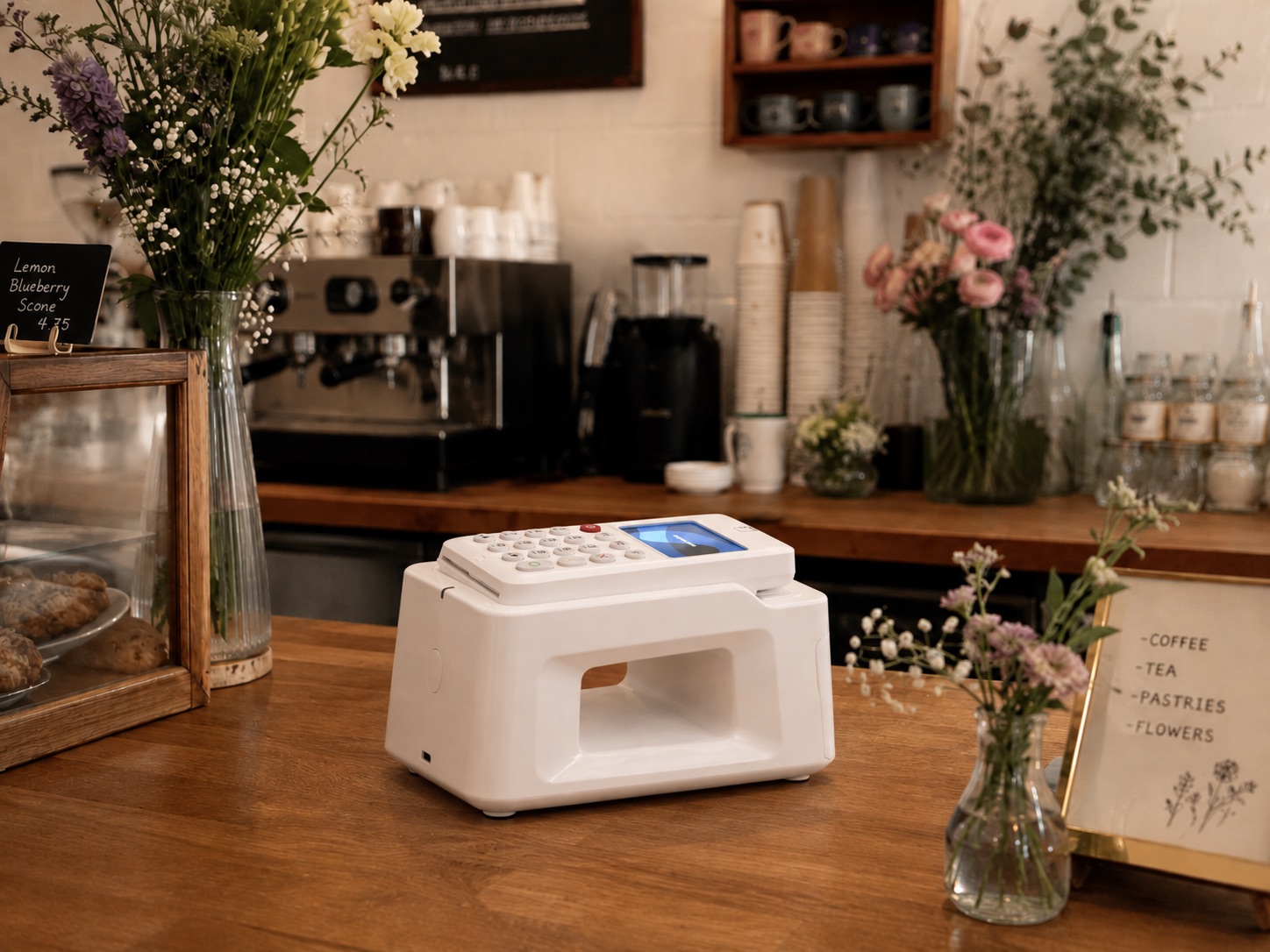
myPOS Ultra – Best for Busier Businesses
This is the more powerful Android terminal in the range, with a large touchscreen and integrated high-speed receipt printer. myPOS says it supports more than 1,500 receipt prints per charge and includes access to its AppMarket.
Best for: busy restaurants, retail counters and businesses processing enough payments to justify a more substantial terminal.
Why it stands out: it is much closer to a full smart POS device than a basic card reader.
What to consider: small or seasonal businesses may simply not need this much hardware.
Price: myPOS Ultra – £229
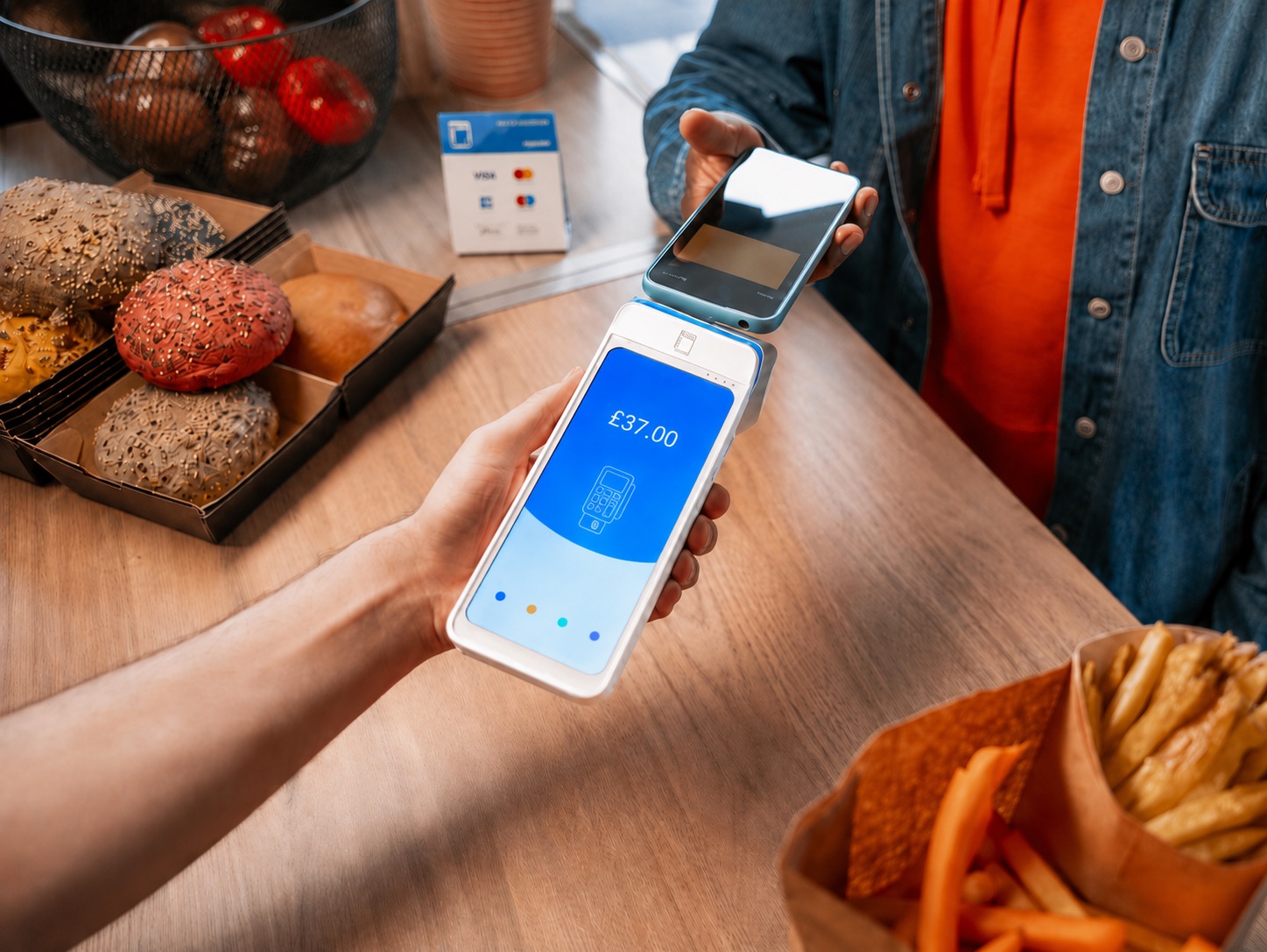
Tap to Pay With myPOS Glass
There is also an option for businesses that would rather not buy a card machine at all.
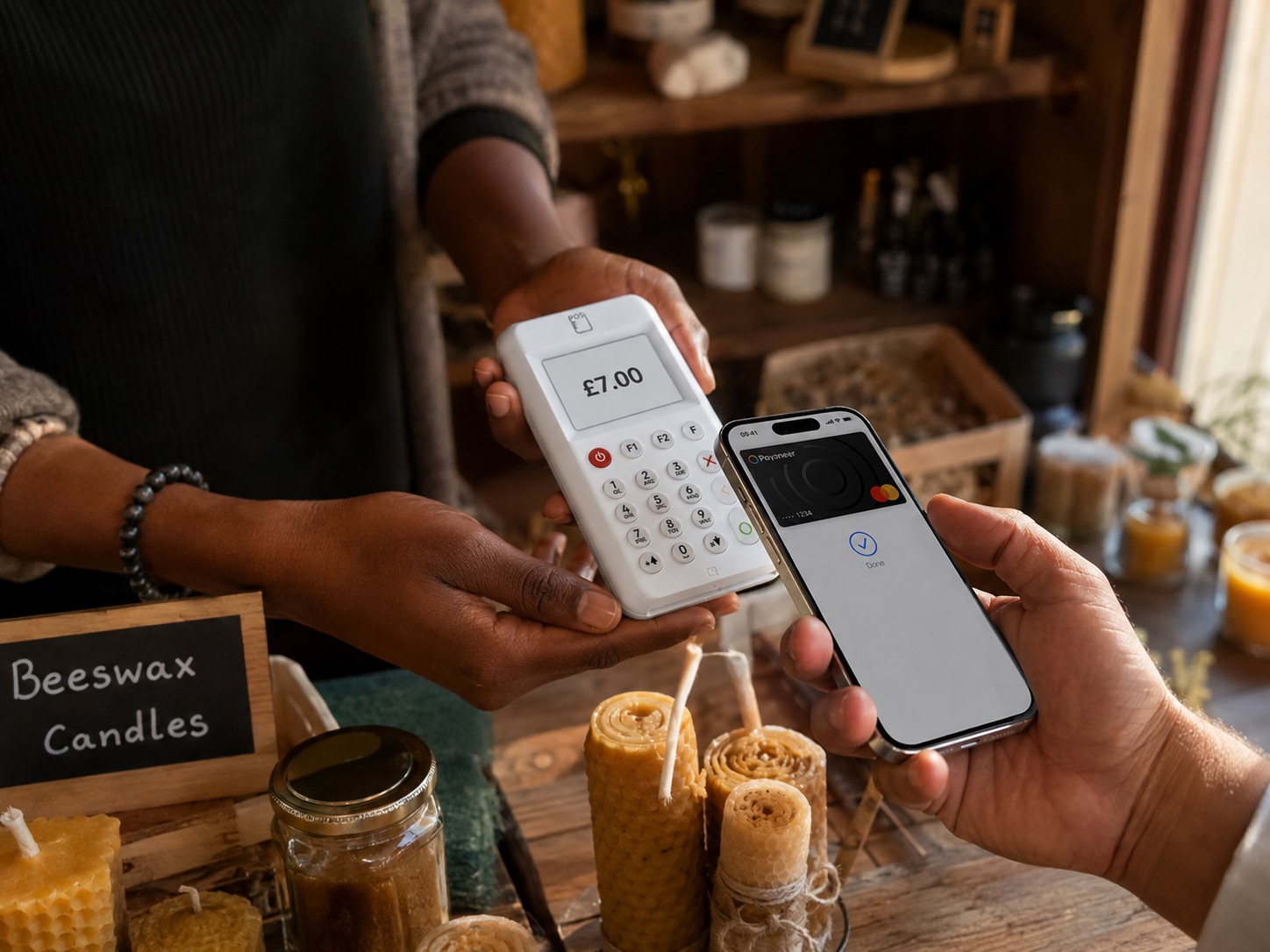
myPOS Glass allows compatible Android phones to accept contactless card and mobile-wallet payments directly through the phone. myPOS currently applies its standard transaction pricing without an additional Glass fee. The service requires Android 11 or later on a supported device.
This feels particularly useful for businesses where a conventional terminal would spend most of its life sitting in a drawer: freelancers, delivery services, mobile beauty professionals, tradespeople or somebody taking occasional payments at events.
It also works nicely as a backup. Card terminals have an extraordinary talent for running out of battery precisely when somebody is trying to pay.
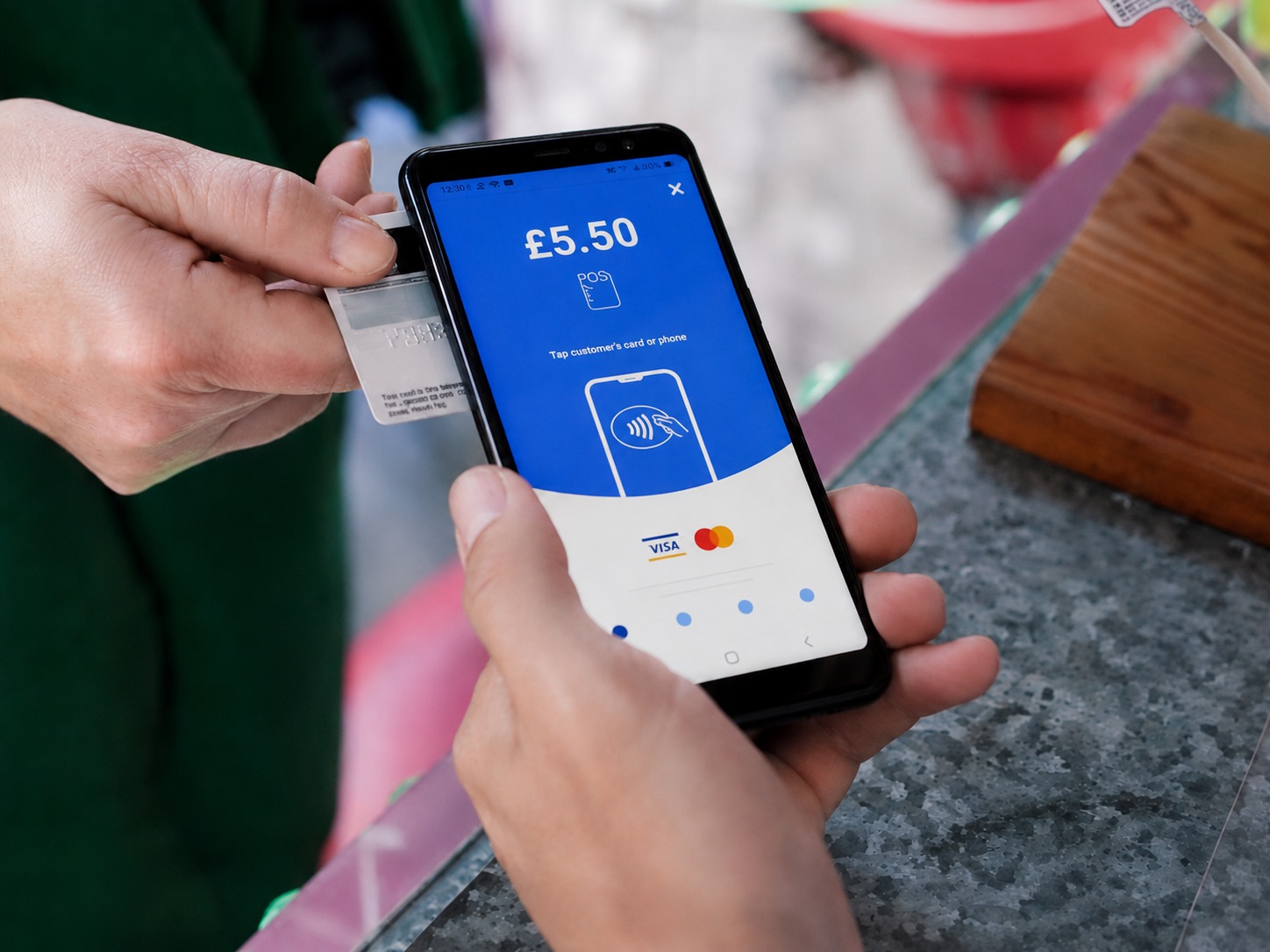
Online Payments and Payment Links
myPOS is not limited to face-to-face sales.
Its online payment tools include checkout integration for ecommerce stores, payment links and requests that can be sent through email, SMS or messaging apps, plus QR payment options.
For small businesses, Payment Request is probably one of the easiest tools to understand.
You create a personalised payment link, send it to the customer and they pay through a secure checkout page. There is no need to build a complete online shop simply to collect one remote payment.
That could be handy for deposits, bookings, invoices, remote services, social-media sellers, or tradespeople taking payment after a job.
For a proper ecommerce site, myPOS Checkout can be integrated through APIs, SDKs or supported shopping-cart plugins.
The myPOS Business Card
Every myPOS merchant can get a business Mastercard, and the first Standard card is currently free.
The card can be used online and in shops and added to Apple Pay or Google Pay. Businesses can also issue cards to team members, set spending limits, freeze cards and monitor transactions through the app.
This is where the instant-settlement idea becomes more useful in practice.
A customer pays you, the money appears in the myPOS account, and you can then access those funds through the associated card rather than waiting for them to move elsewhere first.
The free Standard card will be enough for plenty of businesses. myPOS also offers paid Premium and Metal options, but we would not upgrade just for the sake of having a nicer card. Look at the actual benefits you will use before adding another annual business cost.
myPOS Fees and Pricing
There is no standard monthly charge for the basic myPOS account, and businesses processing under £10,000 per month in card turnover use pay-as-you-go transaction pricing.
For in-person domestic consumer-card payments, the current starting rate is 1.10% + £0.07 per transaction.
Other card types cost more. Current rates include 2.20% + £0.07 for EEA consumer cards, 2.45% + £0.07 for American Express and 2.85% + £0.07 for other consumer and commercial cards. Businesses processing more than £10,000 per month can request custom pricing.
For online payments, the current rates start at 1.30% + £0.15 for domestic consumer cards. American Express is 2.50% + £0.15, while other consumer and commercial cards are currently 2.90% + £0.15.
The important bit is not simply that the headline rate looks low. myPOS pricing changes depending on the card used.
If most of your customers pay with normal UK consumer debit and credit cards, that can work very well. If your customer base regularly uses international or commercial cards, the real average cost may look rather different.
Less Obvious Fees to Know About
The standard account has no monthly or annual service fee, but the full tariff is still worth reading.
- £1.50 for an outgoing GBP bank transfer.
- £4 for a SEPA transfer.
- £5 for an additional business card.
- Certain charges for payment investigations or cancellations.
There is also a £15 inactivity fee and a £30 “No Acquiring Fee” listed in the tariff, but these are not standard monthly charges. myPOS states that they apply only in exceptional cases after 10 consecutive months without relevant activity, with two months’ notice before the charge is applied.
We actually appreciate that this is stated in the tariff, because “no monthly fees” sounds much less reassuring when a business discovers an inactivity charge twelve months later.
Card Machine Delivery, Guarantee and Support
myPOS currently states a typical 2-3 day delivery time for its card machines.
The devices come with a 60-day money-back guarantee and at least a one-year warranty, with options to extend warranty coverage on some devices.
Customer support is advertised as available 24/7, including UK telephone support.
That matters more for a payment provider than it does for most products. A delayed cushion delivery is irritating. A payment terminal refusing to work on your busiest Saturday is rather more urgent.
What Do Customers Say About myPOS?
The overall Trustpilot picture is positive.
When we checked in August 2026, myPOS held a 4.2 out of 5 rating from more than 21,000 reviews. Trustpilot’s current review summary highlights positive comments around helpful staff, ease of setup, straightforward terminals and efficient service.
There are negative experiences too. Some customers describe verification delays, support frustrations or problems when compliance checks affect account access.
That is worth taking seriously, particularly because payment providers are legally required to carry out identity and business checks. We would make sure your company details and documents are in order before relying on any new payment platform as the only way you can take money.
Pros and Cons
What We Loved
- No standard monthly fee for the basic business account
- Card-present fees start at a competitive 1.10% + £0.07 for domestic consumer cards
- Card payments settle into the myPOS account within seconds
- The Go 2 provides a low-cost standalone terminal without needing a phone connection
- Physical terminals, Tap to Pay and online payments all sit within the same system
- The first Standard business card is free
- Card machines include built-in mobile connectivity
- 24/7 support is available
What Could Be Better
- It is an e-money account, not a conventional bank current account
- Transaction pricing varies considerably depending on the type and origin of the customer's card
- Moving money out to another bank account can incur transfer fees
- Some of the tariff's less obvious charges are easy to miss if you only read the headline pricing page
- Businesses that need substantial accounting, lending or banking features may still want a separate business bank account
- Compliance and verification issues appear in some customer reviews
Who Is myPOS Best For?
We think myPOS makes the most sense for small and medium-sized businesses that actively accept card payments.
That could include a café, salon, independent retailer, tradesperson, market seller, restaurant, mobile professional or ecommerce business.
The combination is particularly appealing if you want no fixed monthly payment-processing bill, immediate access to card takings, a standalone card terminal, the option to take online and face-to-face payments from the same provider, and a business card linked directly to incoming payment funds.
We would be less inclined to choose myPOS as the centre of a business that barely accepts card payments and mainly uses its account for bank transfers.
It may also be unnecessarily complicated if all you want is the absolute simplest possible card reader with one flat transaction rate.
myPOS vs Alternatives
There is no universal winner here because the pricing models are quite different.
| Provider | In-Person Pricing Approach | Monthly Cost for Basic Payments | Main Strength | Best For |
|---|---|---|---|---|
| myPOS | From 1.10% + £0.07 for domestic consumer cards | £0 | Instant settlement into included e-money account | Businesses wanting payments, account and card together |
| SumUp | 1.69% pay-as-you-go, or 0.99% on eligible cards with £19/month Payments Plus | From £0 | Very simple payment setup | Small businesses prioritising simplicity |
| Square | 1.75% for standard card-present payments | £0 | Strong POS software ecosystem | Retail, hospitality and businesses needing POS tools |
| Revolut Business | From 0.8% + £0.02 for UK Visa/Mastercard consumer cards | Depends on Business plan | Broader business-finance ecosystem | Businesses already using Revolut |
The attraction of myPOS is not necessarily that it wins every individual fee comparison.
It is the combination of inexpensive hardware, relatively low domestic card rates, an included account and card, and immediate access to card takings.
SumUp is arguably easier to understand because its pay-as-you-go pricing is flatter. Square has a particularly strong POS ecosystem. Revolut Business is broader if banking-style business tools are the priority.
myPOS sits nicely between those approaches.
Final Verdict: Is myPOS a Good Choice?
For the right kind of small business, we think myPOS is a very strong payment setup.
The best feature is not actually the £29 card machine. It is the way the pieces fit together. You can take an in-person or online payment, receive the money into your myPOS account within seconds and access it through the business card without waiting several working days for a payout.
We also like that a very small business can start without committing to a monthly payment-processing contract.
The main thing we would check before signing up is how your business actually moves money. Domestic consumer-card processing is attractively priced, but international and commercial cards cost more, and bank transfers out of the account are not all free.
We would also remember that the myPOS account is an e-money account rather than a traditional bank account. Some businesses will happily use it as their main day-to-day payment account; others may prefer to keep a separate business bank account alongside it.
If your priority is taking payments rather than buying a huge bundle of banking extras, though, myPOS makes a convincing case.
Frequently Asked Questions
Is myPOS a bank?
No. In the UK, myPOS Payments Ltd is an FCA-authorised electronic money institution rather than a bank. The myPOS business account is an e-money account with an IBAN.
Is the myPOS business account free?
There is currently no setup fee, monthly service fee or annual account fee for the standard myPOS business account. Other fees can apply when you use services such as external bank transfers.
How much does myPOS charge per card payment?
For businesses processing under £10,000 per month, in-person payments using domestic consumer cards currently start at 1.10% + £0.07 per transaction. Other card types have higher rates.
How quickly does myPOS pay out card takings?
myPOS says accepted card payments are settled into the merchant’s myPOS account within seconds, including payments taken through terminals and supported online tools.
Does myPOS charge a monthly fee for its card machines?
The standard pay-as-you-go setup has no fixed monthly payment-processing cost. Businesses pay for their hardware and then transaction fees when payments are accepted. Rental options are also available for suitable businesses.
What is the cheapest myPOS card machine?
The myPOS Go 2 is currently the cheapest main terminal in the UK range at £29 excluding VAT.
Can I take payments without buying a myPOS card machine?
Yes. myPOS Glass allows compatible Android phones to accept contactless payments using Tap to Pay. Online payment links and checkout tools are also available.
Does myPOS include a business card?
Yes. The first Standard myPOS business Mastercard is currently free, and it can be used online, in shops and through Apple Pay or Google Pay.
Is myPOS good for freelancers and sole traders?
It can be particularly useful for freelancers, sole traders and mobile businesses that accept card payments but do not want a fixed monthly payment-processing charge. Eligibility and verification requirements still apply when opening the account.