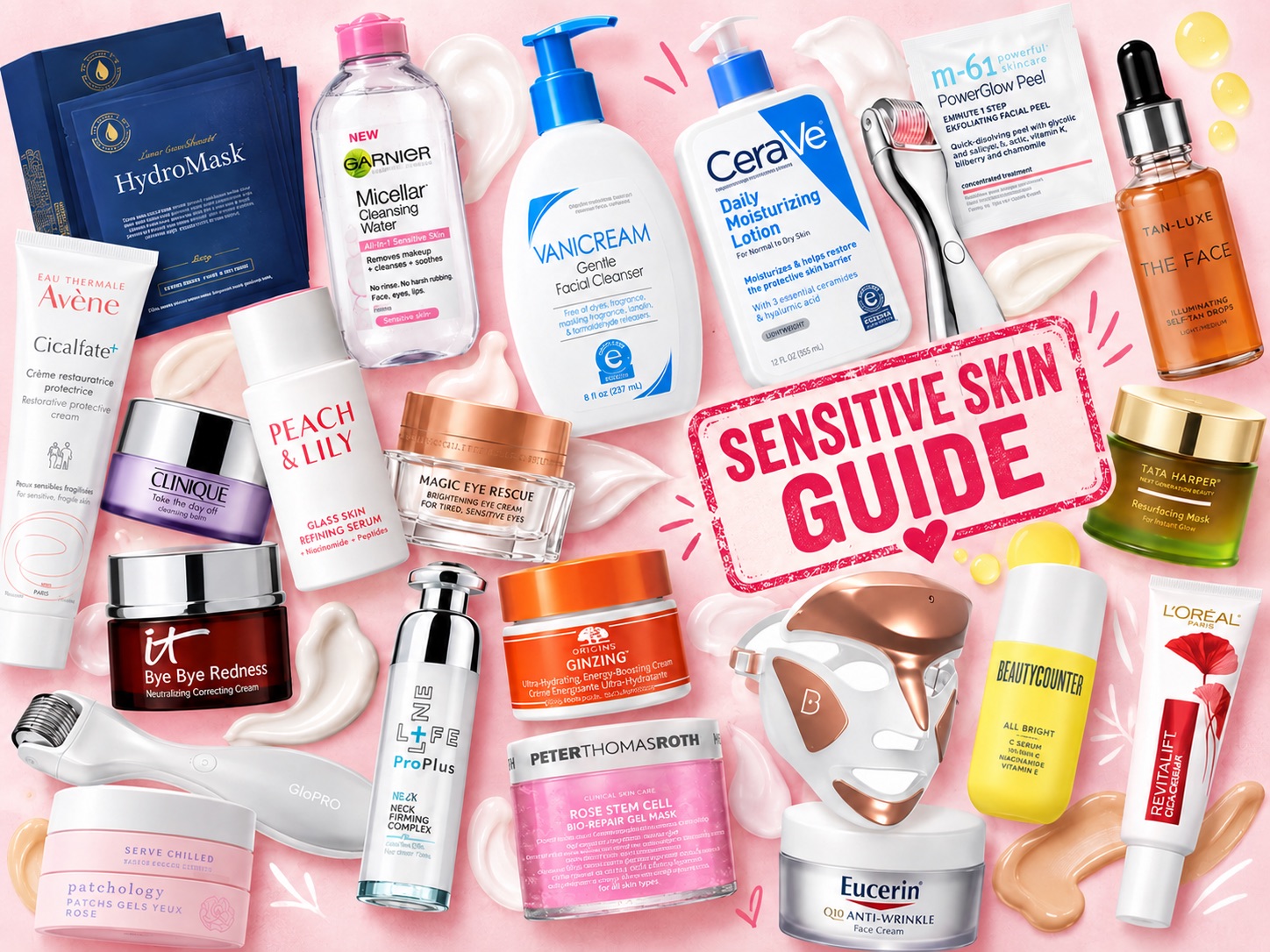
Shopping for sensitive skin can make an ordinary trip down the skincare aisle feel weirdly high stakes.
A cleanser says it is gentle. A moisturizer says it is hypoallergenic. Another bottle promises a “clean” formula made with botanical ingredients. Then there is the fragrance-free version, the unscented version, the dermatologist-tested version — and somehow you are still standing there wondering which one is least likely to make your face angry.
The frustrating part is that “sensitive skin” does not describe one universal skin type with one universal shopping list. Some people mean their skin feels tight after cleansing. Others notice redness, itching, stinging or reactions to particular products. Sensitivity can also change with weather, over-exfoliation, medication, hormonal shifts or an underlying skin condition.
So this is not a list of ingredients that we can promise will be safe for everyone. It is a practical framework for choosing products more carefully, keeping your routine understandable and noticing what your own skin actually tolerates.
What Does “Sensitive Skin” Actually Mean?
Sensitive skin is a broad consumer term rather than one specific diagnosis. People may use it to describe burning, itching, dryness, tightness, redness or discomfort after using cosmetics or being exposed to environmental triggers.
Sometimes sensitivity is fairly consistent. Sometimes it appears after the skin barrier has been stressed by too many exfoliating products, cold weather, sun exposure or an overly ambitious routine. And sometimes what looks like ordinary sensitivity may overlap with conditions such as eczema, rosacea or contact dermatitis.
That distinction matters. A new moisturizer can be chosen more thoughtfully, but persistent rashes, swelling, significant pain or recurring reactions are not something an article should try to diagnose. Those are better discussed with a qualified healthcare professional.
Start With a Simple Routine
Beauty routines have become slightly competitive: cleanser, toner, essence, two serums, eye cream, retinoid, face oil, sleeping mask — maybe a device glowing red somewhere in the background.
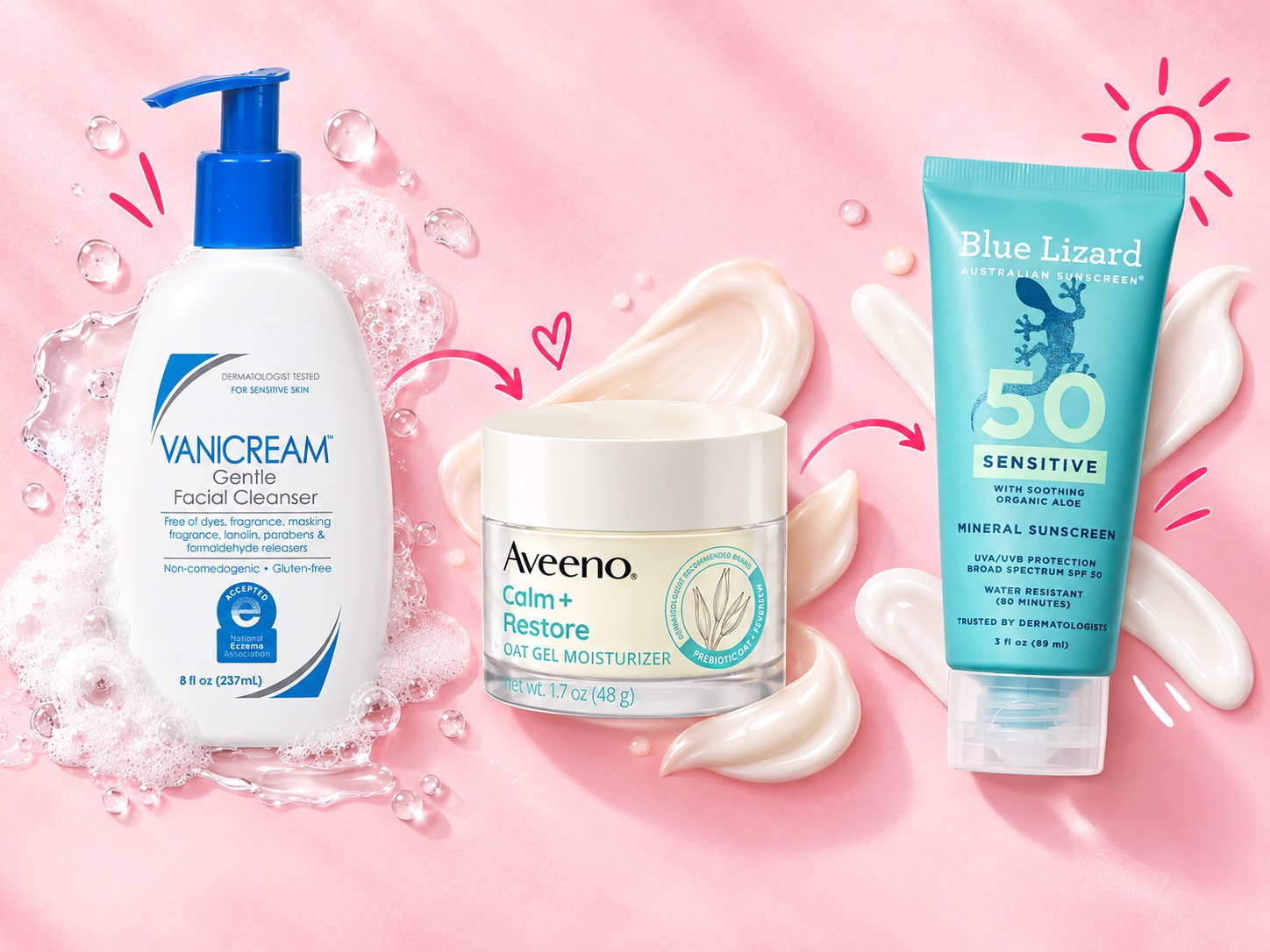
There is nothing inherently wrong with a longer routine if your skin likes it. But when skin is already reactive, complexity makes troubleshooting much harder. A sensible baseline is simply cleanser, moisturizer and daytime sunscreen.
- Gentle cleanser
- Moisturizer that leaves the skin comfortable
- Broad-spectrum sunscreen for daytime use
That gives you a stable starting point before you begin adding exfoliants, retinoids or other treatments. If you introduce three products in one weekend and your skin starts burning on Tuesday, identifying the culprit becomes much harder.
What to Look for in a Cleanser
A cleanser has a fairly unglamorous job: remove dirt, sunscreen, makeup and excess oil without leaving your skin feeling worse than it did before.
For sensitive skin, how your face feels after cleansing can tell you a lot. Skin that immediately feels very tight, dry or uncomfortable may not love the formula, even if the cleanser technically did an excellent job of making your face feel squeaky clean.
Look for products described as gentle or non-stripping, and consider fragrance-free formulas if fragrance tends to be a trigger for you. Creamy, lotion-like or low-foaming textures can sometimes feel more comfortable on dry or reactive skin, although texture alone does not determine whether a product will suit you.
The ingredient list matters, but there is no need to panic over every unfamiliar chemical name. Cosmetics are formulations, not collections of individually “good” and “bad” ingredients. Your own pattern of reactions is more useful than a viral blacklist.
How to Choose a Moisturizer
Moisturizer labels get complicated quickly, but most formulas rely on some combination of a few broad ingredient groups.
- Humectants attract and hold water. Glycerin and hyaluronic acid are familiar examples.
- Emollients help smooth and soften the skin.
- Occlusives form a more protective layer that can help reduce water loss. Petrolatum is a classic example.
- Ceramides are naturally present in the skin and are commonly used in barrier-focused moisturizers.
You do not need to memorize the chemistry. Ask simpler questions: Does the moisturizer sting? Does it leave your skin comfortable for several hours? Is it rich enough for your level of dryness? Does it layer reasonably well under sunscreen or makeup?
A beautifully marketed cream is not automatically better than a $15 moisturizer your skin quietly gets along with. For sensitive skin, “nothing dramatic happened” can actually be an excellent review.
Fragrance: Should Sensitive Skin Avoid It?
Fragrance is one of those skincare topics that turns into an internet argument very quickly. It does not need to.
Fragrance is not automatically “toxic,” and plenty of people use fragranced cosmetics without a problem. But fragrance can be a trigger for some people. The American Academy of Dermatology advises people who react to fragrance to favor fragrance-free products and to be cautious with “unscented” products or botanical ingredients that may still include fragrance-related components.
That distinction between fragrance-free and unscented is useful. “Unscented” primarily tells you that a product is not supposed to smell noticeable; it does not necessarily mean that no masking fragrance ingredients are present.
So if fragrance is a known trigger for you, fragrance-free is usually the more useful label to look for — while still remembering that no label can guarantee that a product will suit every person.
”Natural” Does Not Automatically Mean Gentler
Natural skincare has an understandably comforting image: aloe, lavender, citrus, plant oils and botanical extracts in packaging that looks like it belongs beside a very expensive linen robe.
But plants contain chemicals too, and botanical ingredients can still irritate or sensitize some people. That does not make natural skincare bad. It simply means natural and gentle are not synonyms.
Essential oils and fragrant plant extracts may be perfectly enjoyable for one person and uncomfortable for another. Meanwhile, a very plain-looking synthetic formula may end up being the product that reactive skin tolerates best.
What About Active Ingredients?
Sensitive skin does not necessarily mean a lifetime without retinoids, vitamin C or exfoliating acids. It does mean there is less benefit in treating your face like an ingredient-testing laboratory.
Common actives include retinoids, AHAs such as glycolic and lactic acid, BHAs such as salicylic acid, vitamin C, benzoyl peroxide and stronger exfoliating treatments. Depending on the person and formula, these can be useful, but they can also contribute to dryness or irritation.
The more practical approach is to introduce actives gradually and one at a time. Frequency matters too. A product that is uncomfortable every night may be easier to tolerate less often, but the correct schedule depends on the ingredient, formulation and your own skin.
Do not assume that visible irritation proves an active is “working.” If burning, swelling or a worsening rash develops, stop and reassess rather than trying to push through it.
Patch Testing a New Skincare Product
Patch testing is one of the least glamorous beauty habits and one of the most useful if your skin regularly reacts to new products.
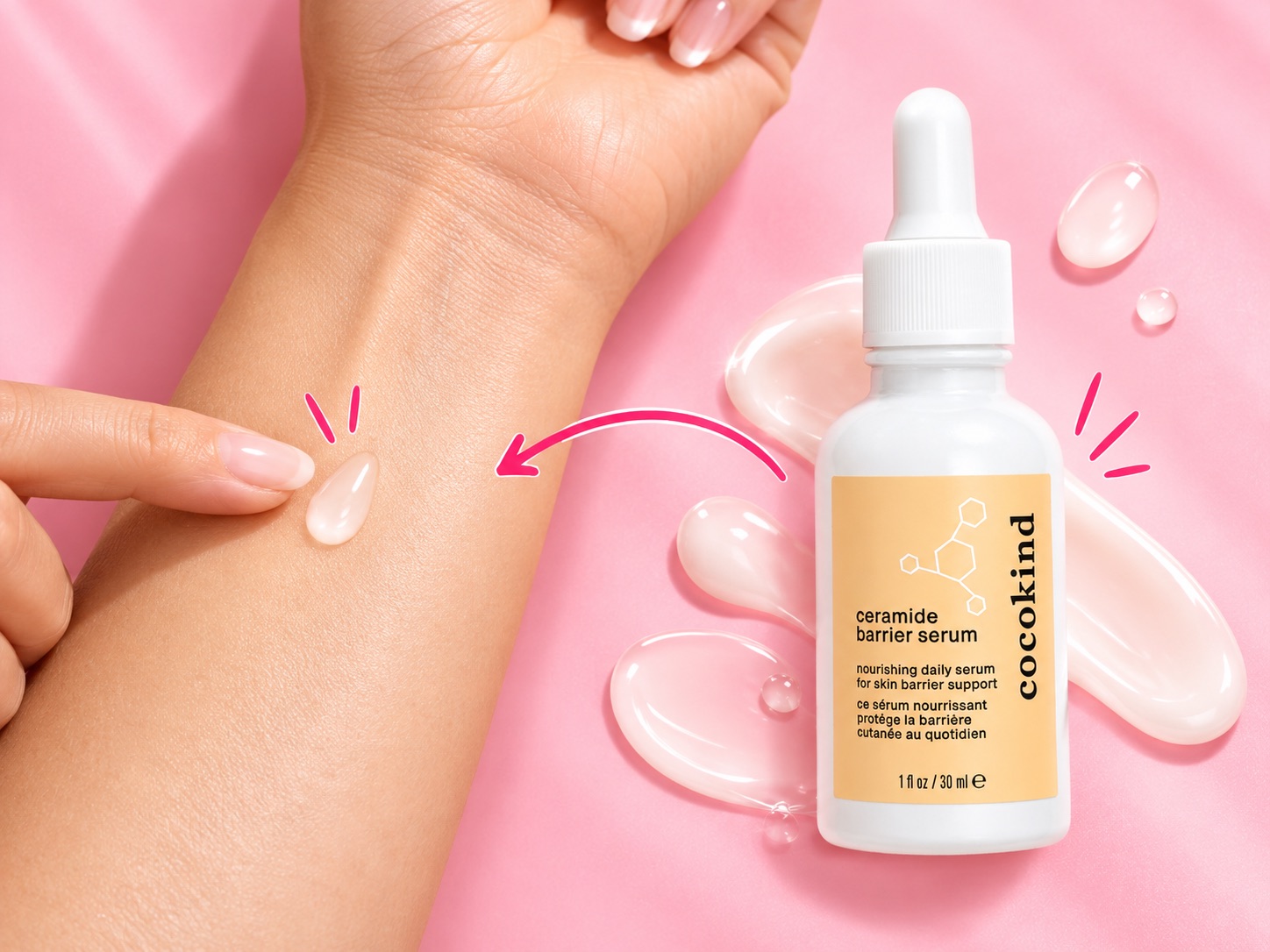
For an at-home product test, the American Academy of Dermatology suggests applying the product to a small area such as the underside of the arm or bend of the elbow, using it as directed, and repeating the test for seven to ten days when practical before wider use.
This does not guarantee that your face will never react. Different areas of the body can behave differently, and reactions may still develop later. But testing a small area first gives you useful information before you apply a new formula everywhere.
And this is different from professional patch testing, which dermatologists may use when investigating allergic contact dermatitis.
Choosing Body Products for Sensitive Skin
Sensitive skincare does not stop at the jawline. Body washes, soaps, deodorants, shaving products, body lotions and even laundry products can come into frequent contact with the skin.
The same basic logic applies: keep the routine understandable, pay attention to fragrance if it is a known trigger, notice how skin feels after cleansing and avoid changing several products at once when you are trying to identify a reaction.
Body wash deserves particular attention because it covers a much larger area than face cleanser. A heavily fragranced wash that never bothers your arms may still feel uncomfortable on freshly shaved or particularly dry skin.
Is Expensive Skincare Better for Sensitive Skin?
Not necessarily. Sensitive skin has no idea what your moisturizer cost.
A luxury product may contain excellent ingredients, elegant packaging and a texture you genuinely love. It may also contain fragrance or several botanical extracts your particular skin dislikes. A drugstore moisturizer can be less exciting to photograph and work perfectly well.
When comparing products, look beyond the price tag. Formula, fragrance, number and strength of active ingredients, packaging, product size, cost per ounce and return policy all tell you more about whether a purchase makes sense.
None of this means expensive skincare is a waste of money. Beauty products are allowed to be enjoyable. Price simply is not evidence that a product will be kinder to reactive skin.
How to Read a Skincare Label
Ingredient lists look intimidating because cosmetics are usually listed by standardized ingredient names rather than the cute language on the front of the bottle. You do not need to become a cosmetic chemist. Start with the things that are relevant to your own routine.
Fragrance or Parfum
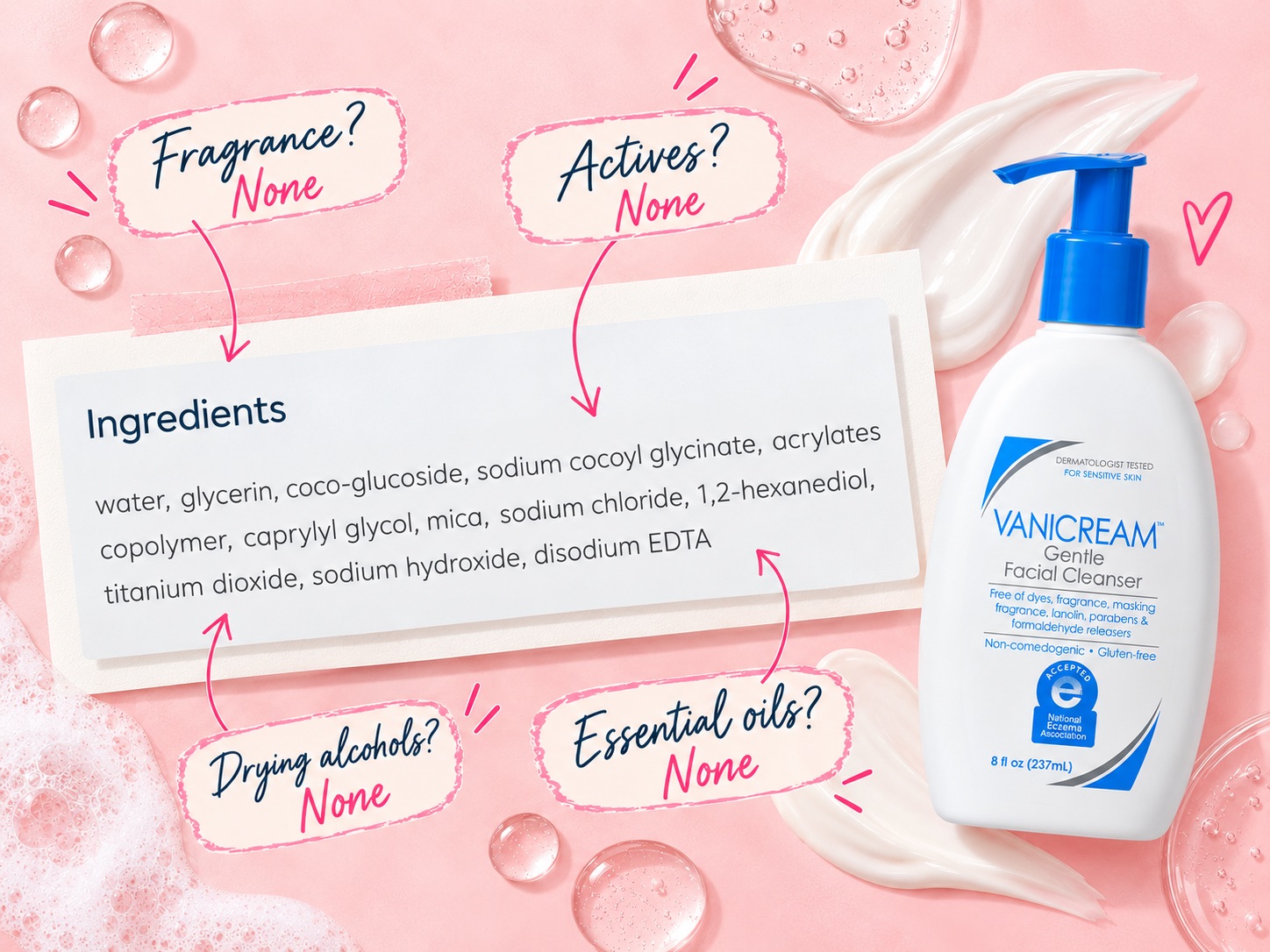
If fragrance has caused problems for you before, check the ingredient list rather than relying entirely on front-label marketing.
The FDA notes that US terms such as “hypoallergenic,” “fragrance-free” and “for sensitive skin” do not have a federal standard that guarantees a person will not react, and certain fragrance ingredients may appear collectively as “fragrance” or “perfume.”
Active Ingredients
Know which products in your routine already contain retinoids, exfoliating acids, benzoyl peroxide or other strong actives. Accidentally doubling up is surprisingly easy.
Alcohol
“Alcohol” is not one single skincare ingredient. Some alcohols can feel drying in particular formulas or at higher concentrations, while fatty alcohols such as cetyl alcohol and cetearyl alcohol are commonly used as emollients or texture-supporting ingredients. A rule like “avoid every ingredient containing the word alcohol” is too simplistic.
Essential Oils
They are not automatically bad, but they are not automatically gentle either. If fragranced botanical products tend to bother your skin, essential oils deserve extra attention.
Ingredient List Length
Shorter is not always better. A twenty-ingredient formula can be thoughtfully designed for sensitive skin. A five-ingredient formula can still contain something you personally react to. Ingredient count is not a safety score.
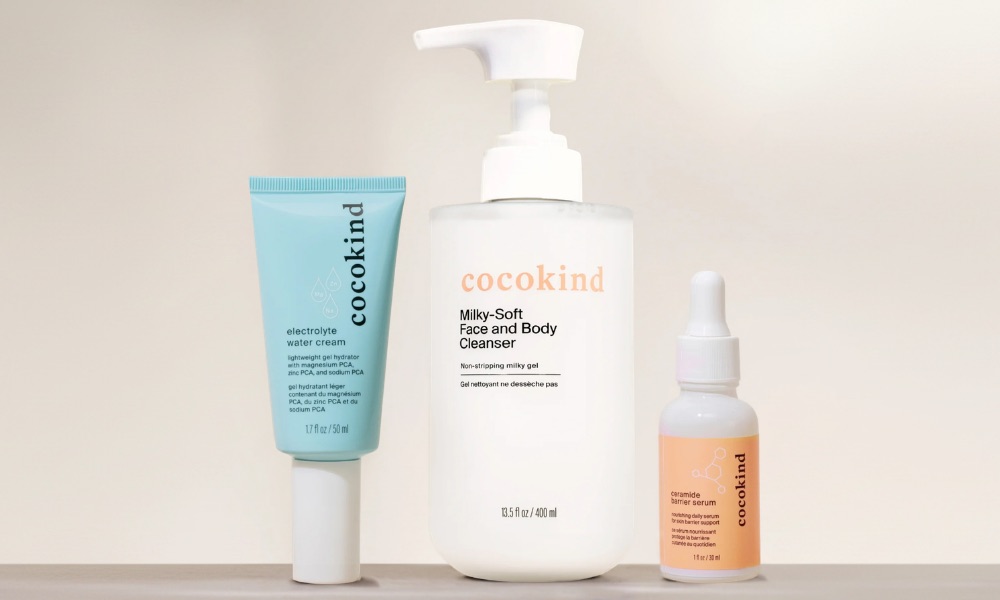
For a real-world example of a brand built around relatively straightforward skincare routines, see our Cocokind Review 2026 for a closer look at the range and who it may suit.
Sunscreen and Sensitive Skin
Sunscreen is one category where people with reactive skin sometimes give up too quickly because finding the right texture can be annoying.
Some people find mineral filters such as zinc oxide more comfortable; others do perfectly well with organic — often called “chemical” — UV filters. There is no universal sensitive-skin winner.
Texture, finish, fragrance, eye-area comfort and compatibility with the rest of your routine all matter. The best sunscreen is ultimately one your skin tolerates and that you are willing to apply consistently and correctly.
When to Stop Using a Product
Beauty culture sometimes encourages people to interpret discomfort as evidence that a product is “working.” That is not a great rule.
Some active ingredients can cause temporary dryness or mild irritation when introduced, but persistent burning, significant swelling, intense redness, hives or a worsening rash should not simply be treated as the price of better skin.
Stop using a product that appears to be causing a significant reaction. If symptoms are severe, spread, involve substantial swelling or do not settle after stopping the suspected product, seek appropriate medical advice.
If your skin seems to react to almost everything, trying more and more random products may be less useful than asking a dermatologist to help identify the trigger.
Sensitive-Skin Shopping Checklist
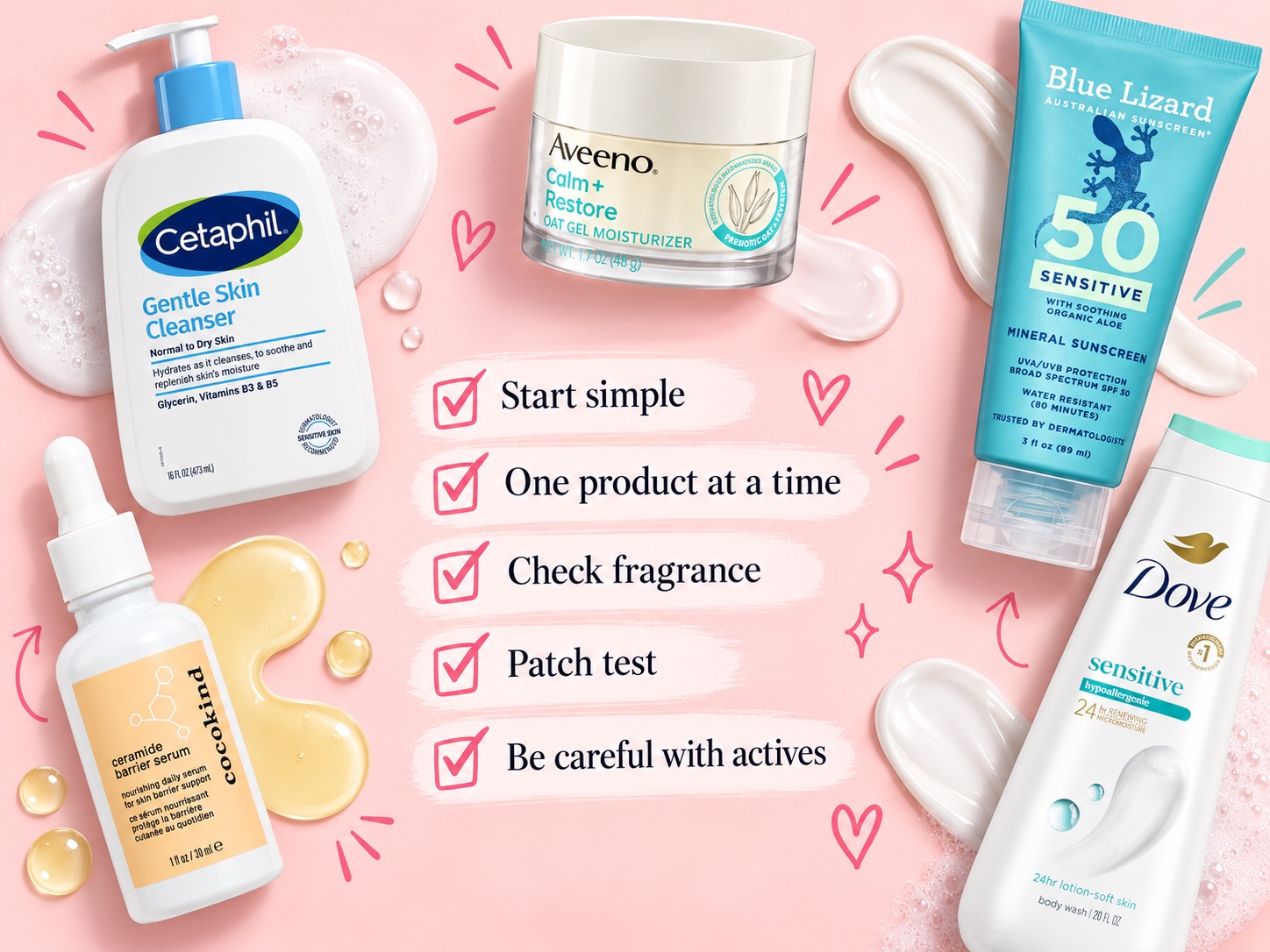
- Start simple. Cleanser, moisturizer and sunscreen give you a useful baseline.
- Introduce one new product at a time so a reaction is easier to trace.
- Prioritize fragrance-free formulas if fragrance is a known or suspected trigger.
- Do not assume “unscented” means fragrance-free.
- Patch test new products when practical, especially if you have reacted to skincare before.
- Do not assume natural means gentle. Botanical extracts and essential oils can still be triggers.
- Be cautious when combining several actives. More is not automatically better.
- Read the full ingredient list rather than relying only on front-label claims.
- Ignore the price hierarchy. Expensive does not automatically mean more suitable.
- Pay attention to your own skin. Your response matters more than a trending ingredient list.
The slightly boring truth about sensitive skincare is that consistency often beats experimentation. Once you find a cleanser that does not strip your face, a moisturizer that feels comfortable and a sunscreen you can actually stand wearing, you do not need to replace them just because the internet discovered another ingredient on Tuesday.
Frequently Asked Questions
What ingredients are best for sensitive skin?
There is no single ingredient list that is best for everyone. Glycerin, ceramides, hyaluronic acid and other moisturizing ingredients are common in formulas designed for dry or sensitive skin, but the complete formulation and your individual response still matter.
Should sensitive skin avoid fragrance?
Not everyone with sensitive skin reacts to fragrance, but fragrance is a trigger for some people. If fragranced products have caused discomfort before, fragrance-free skincare is a sensible place to start.
Is hyaluronic acid good for sensitive skin?
Hyaluronic acid is a humectant commonly used to help retain moisture and appears in many sensitive-skin formulas. No ingredient is guaranteed to suit everyone, though, and the rest of the formula matters too.
Is niacinamide suitable for sensitive skin?
Many people tolerate niacinamide well, and it appears in plenty of barrier-focused skincare. That does not mean every concentration or formula will suit every person. Introduce it like any other new active rather than assuming more niacinamide automatically means better results.
Are natural skincare products better for sensitive skin?
Not automatically. Natural ingredients can still irritate or trigger allergic reactions, and essential oils or fragrant botanical extracts may be problematic for some people. “Natural” describes ingredient origin, not guaranteed gentleness.
How do I patch test a skincare product?
Use a small amount on a limited area such as the inner arm and use it as directed for several days before wider application when practical. This can reduce surprises, but it cannot guarantee that a reaction will never occur elsewhere.
Can sensitive skin use retinol?
Sometimes, yes. Retinoids can cause dryness and irritation, so reactive skin may need a slower introduction, lower frequency or a different formulation. If you have an existing skin condition or repeatedly react to retinoids, professional guidance is more useful than forcing your way through irritation.
How many skincare products do I actually need?
There is no required number. A basic routine can be as simple as a gentle cleanser, moisturizer and daytime sunscreen. Treatments can be added when they address a specific goal and your skin tolerates them. You do not earn extra skincare points for owning nine serums.