Buying a puppy online is not the same as ordering furniture or booking a hotel. You are choosing a living animal, committing to years of care, and relying on information about a breeder you may never meet in person. That is why convenience alone is not enough.
For this PuppySpot review, we checked the platform’s current breeder standards, purchase terms, delivery process, and 10-year health commitment. The service can make it easier to find a specific breed and coordinate travel, but the fine print matters. Current puppy listings can cost several thousand dollars, delivery is quoted separately, and the health commitment depends on insurance, veterinary records, and strict claim requirements.
What Is PuppySpot?
PuppySpot is a puppy placement service founded in 2005. It is not a breeder, shelter, or rescue. Buyers purchase a puppy from an independent breeder, while PuppySpot provides the listings, payment process, customer support, health documentation, and delivery coordination.
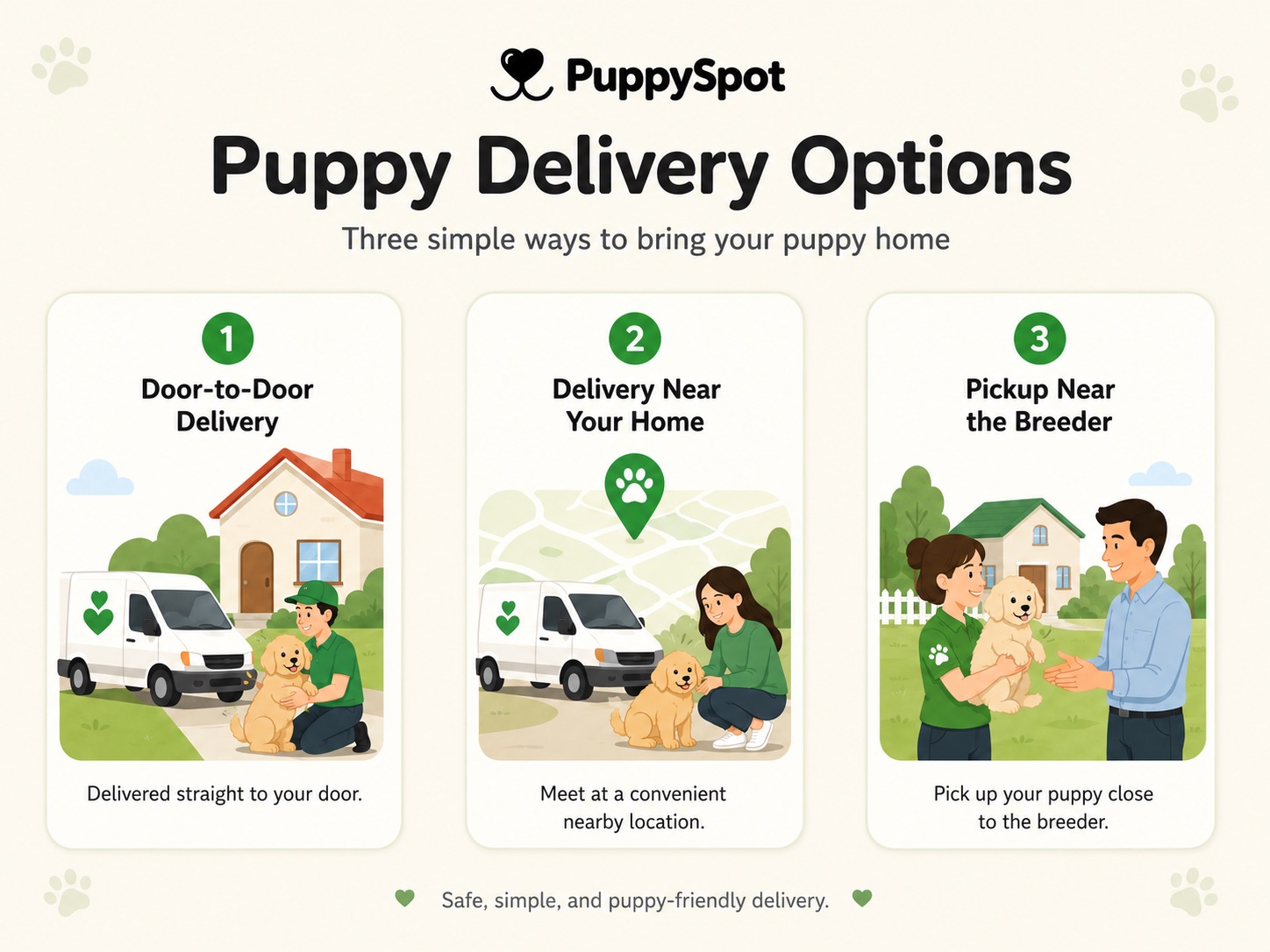
The platform lists purebred and designer-breed puppies from breeders across the United States. Its main appeal is access: families can compare puppies from outside their local area and choose home delivery, delivery near home, or pickup near the breeder.
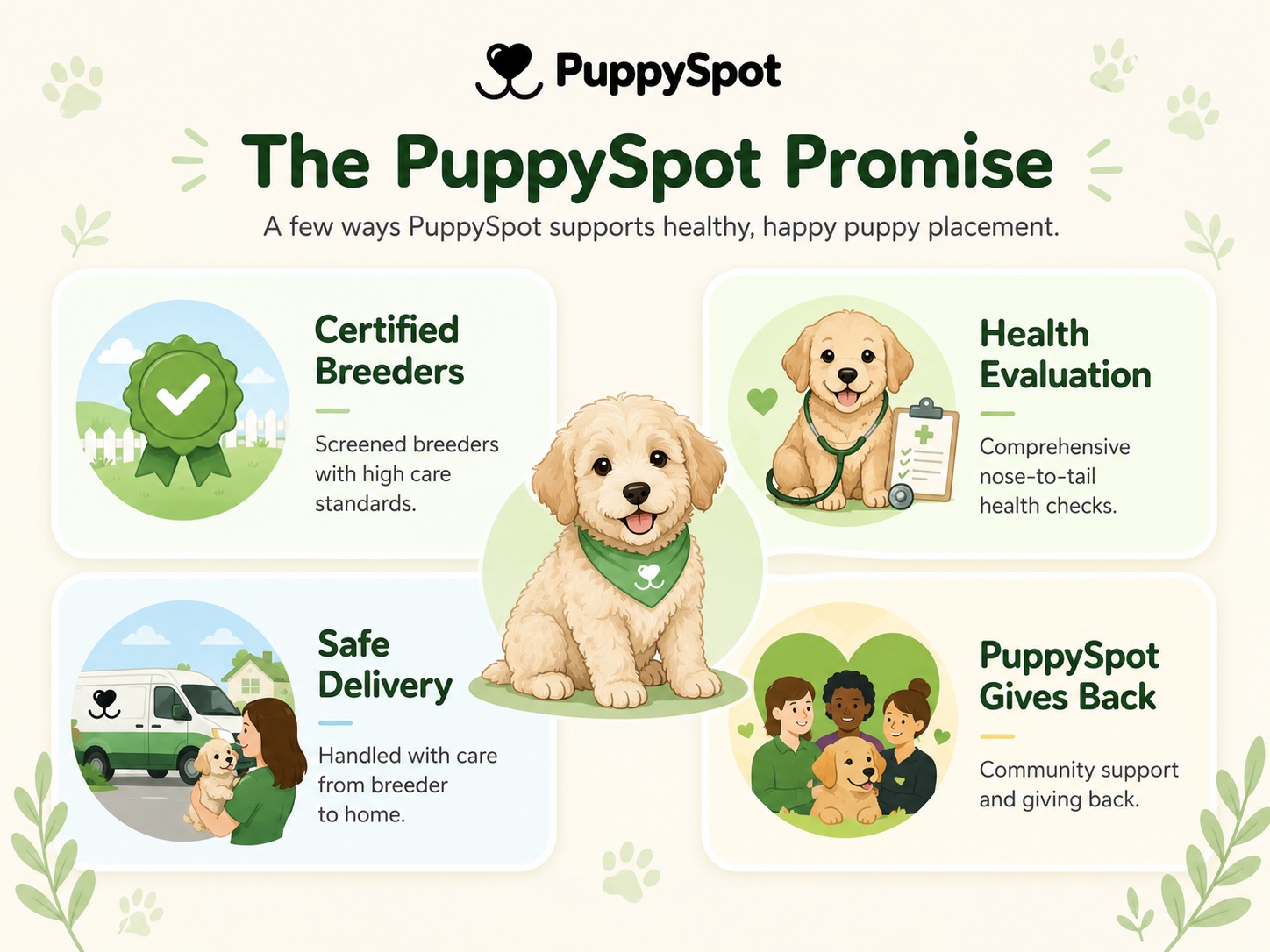
PuppySpot says breeders undergo identity and background checks, health and facility reviews, onboarding, and ongoing compliance monitoring. The company also requires buyers to connect with the breeder before purchase. That direct conversation is useful, but it should be treated as the beginning of your due diligence rather than a substitute for it.
How PuppySpot Works
Search and Contact the Breeder
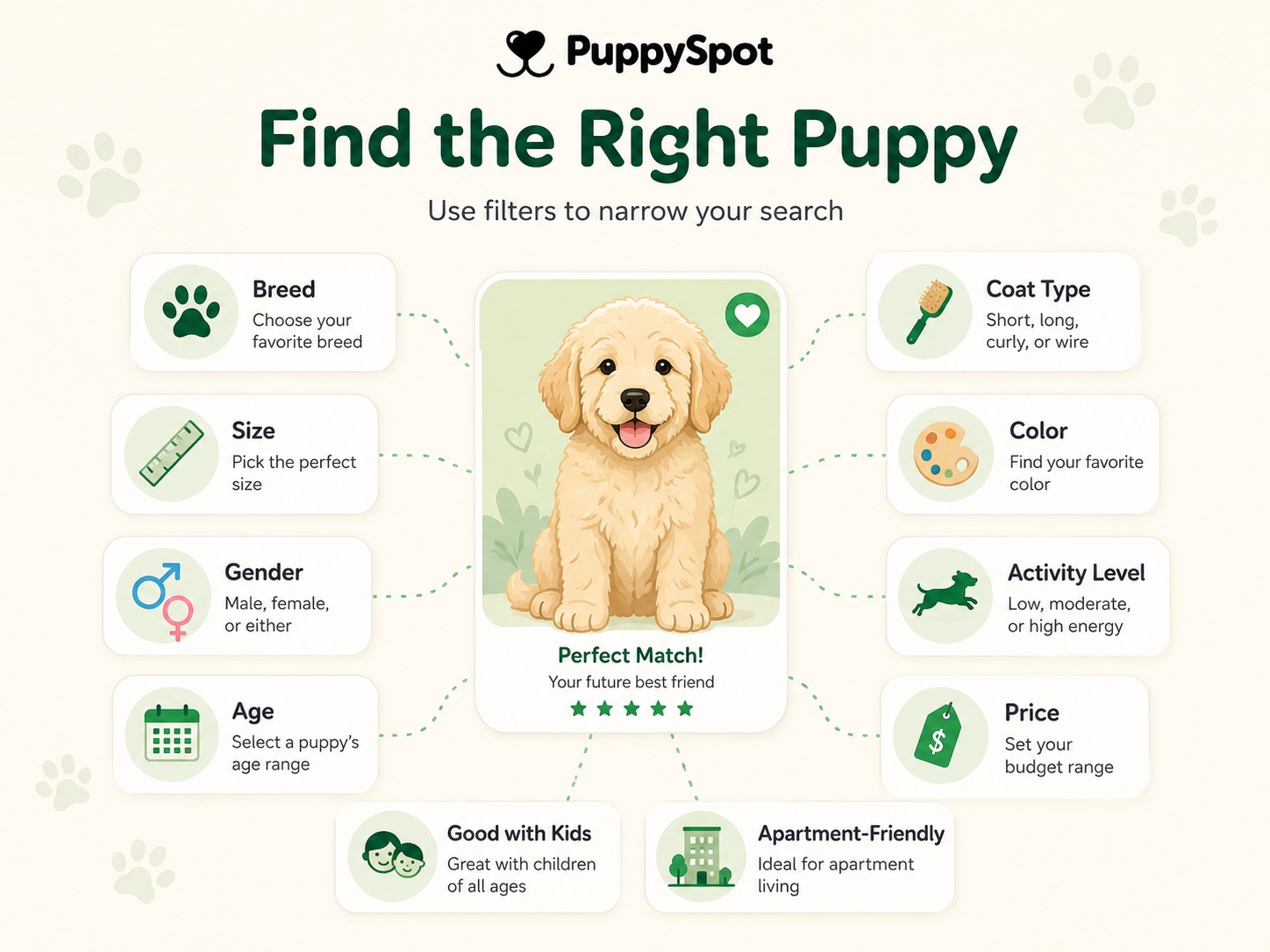
You can search by breed, size, age, gender, and lifestyle. Individual listings may show the puppy’s age, expected adult size, parent information, breeder experience, health records, and available delivery methods.
Before purchase, PuppySpot says buyers must connect directly with the breeder. Use that conversation to ask for a live video with the puppy, information about both parents, breed-specific health tests, socialization details, and the exact environment where the litter is being raised.
Price, Hold, and Cancellation Terms
Puppy prices vary by breed, age, breeder, and availability, and current listings can reach several thousand dollars. The final invoice may also include travel, a health certificate, taxes, and optional products. Current published delivery charges are $849 for door-to-door service, $649 for delivery near your home, $749 for Priority Preferred near-home delivery, and $0 to $199 for pickup near the breeder.
The current terms do not use a flat $500 deposit. A puppy can be held for up to 72 hours while you complete payment, and PuppySpot retains 25% of the total invoice as a non-refundable deposit. If you cancel within the first 72 hours after purchase, the published schedule returns 75% of the invoice. After 72 hours, the stated refund falls to 50%, and cancellation within 72 hours of arrival receives no refund.
Those terms make impulse buying especially risky. Confirm housing rules, allergies, family agreement, travel timing, and your full first-year budget before placing a hold.
Delivery and Pickup
PuppySpot currently offers three standard routes plus a faster priority option. Door-to-door delivery costs $849, delivery near your home costs $649, and Priority Preferred near-home delivery costs $749 when available. Pickup near the breeder costs $0 when the meeting point is within ten miles, or $199 for a meeting point ten to twenty-five miles away.
Door-to-door and near-home delivery generally take two to four weeks after the puppy is cleared to travel. Pickup near the breeder is usually faster, at roughly one to two weeks. Timing can change because of veterinary clearance, age and weight requirements, weather, route planning, and transport availability.
Pickup is the strongest option when practical because it gives you a better chance to meet the breeder and ask questions face to face. However, PuppySpot notes that pickup may be arranged near the breeder rather than at the breeding facility, so confirm the exact meeting setup before paying.
The 10-Year Health Commitment Explained
The 10-year health commitment is useful, but it is not a simple promise that every veterinary bill will be covered. During the first 14 days, the current terms provide reimbursement for reasonable treatment of a diagnosed contagious disease, illness, or parasite, up to the puppy’s purchase price. Pet insurance is not required for that initial 14-day provision.
During the first year, congenital or hereditary conditions can qualify for reimbursement of documented veterinary expenses up to the purchase price. For years two through ten, the benefit is more limited and includes breed exclusions: qualifying claims may result in a credit equal to 50% of the original puppy price or reimbursement of veterinary expenses up to 25% of that price.
The biggest condition is insurance. The commitment requires major-medical pet insurance to remain active for the first 12 months after arrival. Dropping coverage during that period voids the commitment. Claims may also require two veterinary diagnoses, fast written notice, full medical records, and proof that you first submitted the expense to your insurer.
Read the current terms before purchase and save a copy with your invoice. The coverage amount is based on the puppy’s purchase price and does not include travel, taxes, optional services, or every condition that may affect a young dog.
How Transparent Is the Breeder Screening?
PuppySpot says its screening includes identity and background checks, licensing review, health and facility evaluations, breeder onboarding, and continuous compliance monitoring. Current listings can also include breeder experience, credentials, parent information, and some health certifications.
That is more structure than an anonymous classified ad, but buyers still need to verify the specific breeder and litter. A platform-level approval cannot tell you everything about daily conditions, the temperament of the parent dogs, the quality of socialization, or whether all breed-recommended testing was completed.
The ASPCA’s responsible breeder checklist recommends seeing where the puppies are raised, meeting the mother, reviewing health records, and avoiding sellers who pressure you to decide quickly. You can also use the USDA Animal Care Public Search Tool to look for available licensing and inspection information when a breeder is federally regulated.
Ask PuppySpot for the breeder’s full name and license details before final payment. Then request copies of breed-specific tests for both parents, not only a general veterinary certificate for the puppy.
Pros and Cons
What We Loved
- Large national selection makes it easier to find a specific or less common breed without relying on local availability
- Buyers are now expected to connect directly with the breeder before purchase
- Three delivery and pickup routes provide more flexibility than arranging interstate transport alone
- Puppies receive a pre-travel veterinary exam, vaccination and deworming records, and a health certificate
- The lifetime rehoming program gives owners a defined contact if they can no longer care for the dog
What Could Be Better
- Many current listings require a concierge call for final costs, making it harder to compare the complete price quickly
- The 25% non-refundable hold and declining cancellation refunds leave little room for changing your mind
- The 10-year health commitment has insurance, documentation, timing, reimbursement, and breed-related limitations
- An online placement process offers less direct visibility than visiting a breeder's home and meeting the parent dogs in person
Who Is PuppySpot Best For?
PuppySpot is best for buyers who want a specific breed, have limited local options, and value a managed search and delivery process. It can also suit families willing to pay more for access, coordination, and customer support instead of finding and arranging transport with a breeder independently.
It is not the best choice for someone making an emotional same-day decision, shopping only by the lowest price, or expecting the health commitment to replace pet insurance and emergency savings. It is also a weaker fit for buyers who will not proceed unless they can visit the breeding facility and meet the puppy’s mother in person.
PuppySpot vs Alternatives
PuppySpot’s clearest advantage is convenience: a national inventory, concierge support, and organized delivery. The trade-off is that the buyer must work harder to verify the breeder behind a polished marketplace listing.
| Option | Main Strength | Best For |
|---|---|---|
| PuppySpot | Concierge support and nationwide delivery | Buyers seeking a specific breed with a managed process |
| Good Dog | Detailed breeder profiles and visible health-testing information | Buyers comfortable doing more direct breeder comparison |
| Breed-club referral | Direct contact with breed specialists and established programs | Buyers prioritizing breeder relationships and willing to wait |
| Shelter or rescue | Lower adoption cost and a home for an existing dog | Families flexible on exact breed, age, or pedigree |
Good Dog can make parent health-testing information easier to compare, although the platform says much of its screening relies on breeder-reported practices and buyers should still request documentation. Breed-club referrals usually require more patience but can provide the strongest direct relationship. A shelter or rescue is the most practical alternative when breed certainty is less important than finding a suitable companion.
Final Verdict: Should You Use PuppySpot?
PuppySpot is a legitimate service that can simplify a difficult search. Its national reach, breeder connection, health records, delivery coordination, and ongoing support are meaningful advantages for buyers who cannot find the right puppy locally.
However, it should not be treated as a shortcut around breeder research. The total cost can be high, the cancellation policy becomes restrictive quickly, and the 10-year health commitment has more conditions than its headline suggests.
Our recommendation is conditional: consider PuppySpot when you have already chosen the right breed, understand the complete invoice, speak directly with the breeder, review parent health tests, and accept the insurance and cancellation requirements. If the breeder will not provide clear answers or you cannot verify the conditions you care about, do not let convenience or a puppy photo rush the decision.
Frequently Asked Questions
Is PuppySpot a legitimate company?
Yes. PuppySpot says it has operated since 2005 and functions as a service platform connecting buyers with independent breeders. Legitimacy does not remove the need to investigate the specific breeder, request health-testing records, and understand the purchase terms.
How much do PuppySpot puppies cost?
Prices vary widely by breed, age, breeder, and availability, and current listings can reach several thousand dollars. Delivery, health certificates, taxes, insurance, and optional products can increase the final cost. Ask for the full itemized invoice before placing a hold.
Does PuppySpot require a deposit?
The current terms describe a non-refundable hold equal to 25% of the total invoice, not a fixed $500 deposit. The puppy may be held for up to 72 hours while the remaining payment is completed.
What does the PuppySpot health commitment cover?
Coverage changes over time. The first 14 days include certain illnesses and parasites; the first year covers qualifying congenital or hereditary conditions up to the puppy’s purchase price; and years two through ten provide more limited benefits. Pet insurance must remain active for the first 12 months, and claims have strict documentation and notice requirements.
Can you return a puppy to PuppySpot?
PuppySpot does not accept a puppy back for a monetary refund after delivery. If an owner can no longer provide care, the terms require contacting PuppySpot for its rehoming program, with the owner responsible for related travel costs.