

A cheap international ticket can become an expensive mistake once baggage fees, a risky connection, an overnight airport stay, and a poor seat are added. The opposite is also true: the most familiar airline is not automatically the best choice for every route.
To choose the right international airline, look beyond the first fare shown in search results. The best long-haul option is the one that fits the whole trip - your schedule, luggage, comfort needs, connection risk, and plans if something goes wrong. This guide breaks the decision into seven checks that are easy to compare before you pay.
What Makes an Airline Right for a Long-Haul Flight?
For a two-hour trip, a tight seat or inconvenient departure time may be manageable. On an eight-, ten-, or fourteen-hour journey, small differences matter more. A better schedule can protect the first day of a vacation. A checked bag included in the fare can erase a price gap. A single protected ticket can make a missed connection much easier to solve.
The goal is not to find one airline that is best everywhere. It is to identify the strongest option for a specific route and trip. Compare airlines on the same dates, in the same cabin, with the same baggage and seat needs. Only then does the price comparison mean anything.
For a real example of how aircraft, fare type, and alliance can change the value of one carrier, read our ITA Airways Review 2026.
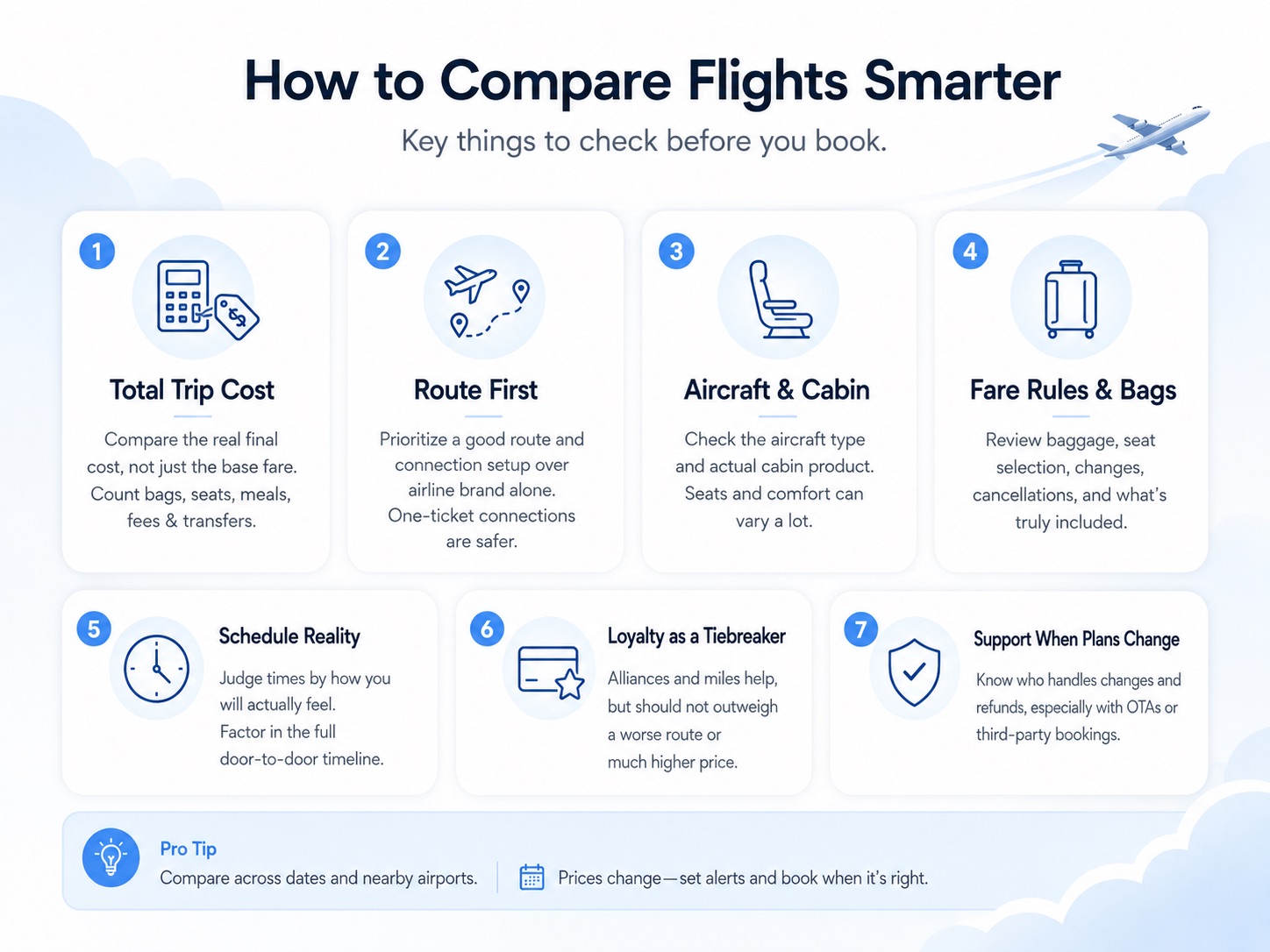
How to Choose the Right International Airline: 7 Checks
1. Compare the Total Trip, Not the Base Fare
Start with the final checkout price. Add checked baggage, seat selection, carry-on restrictions, meals, payment fees, and any transfer needed to reach a secondary airport. A basic fare may still be the best deal, but only when you genuinely do not need the extras it removes.
Also compare what happens after arrival. A flight that lands at 6 a.m. may save a hotel night, while a late arrival can force you to pay for a private transfer or lose the first day of a tour. The cheapest ticket is not always the cheapest trip.
2. Prioritize the Route Before the Brand
A nonstop flight is usually easier on the body and removes the risk of a missed connection. Still, one connection can be reasonable when it saves a meaningful amount, improves the departure time, or gives you a much better cabin.
When comparing connections, check whether every segment is on one reservation. A single ticket usually gives the operating airlines more responsibility for rebooking you if the first flight causes a missed connection. Separate tickets can leave you responsible for buying a new onward flight.
3. Check the Aircraft and the Actual Cabin
An airline name does not tell you exactly what seat you will get. The same carrier may use several aircraft on one route, with different seat widths, layouts, screens, storage, privacy, and Wi-Fi systems. Business Class may be fully flat on one aircraft and far less impressive on another.
Open the flight details before booking and note the aircraft type. Then check the airline seat map and cabin description. Aircraft swaps can happen, so no seat is guaranteed, but this step reduces the chance of paying for a product you misunderstood.
4. Read the Fare Rules and Baggage Allowance
Do not assume that Economy includes a checked bag or that Business Class includes lounge access on every route. Fare families can change what is included even within the same cabin. Look for the exact rules attached to the fare you selected, not the general cabin description on the airline homepage.
Pay special attention to change fees, cancellation terms, seat selection, carry-on weight, checked-bag limits, and whether the cheapest fare earns miles. For travelers carrying sports equipment, a stroller, or several bags, baggage rules can matter more than a small difference in ticket price.
5. Judge the Schedule by How You Will Feel
Departure and arrival times affect more than convenience. An overnight flight followed by a morning arrival may help you use the first day, but only if you can function after limited sleep. A daytime flight may be easier for families, anxious flyers, or travelers who struggle to rest on planes.
Look at the entire timeline: when you need to leave home, check-in time, connection length, immigration, the trip from the airport, and hotel check-in. A schedule that looks fast on paper can feel much longer once these steps are included.
6. Consider Alliances and Loyalty - but Do Not Let Them Decide Everything
An airline alliance can make through-ticket connections, lounge access, mileage earning, and status benefits easier across partner carriers. That is useful when two flights are otherwise close in price and schedule.
Loyalty should be a tiebreaker, not the first filter. Earning miles is rarely worth accepting a poor route, a risky connection, or a much higher fare. Confirm that your exact booking class earns the miles or benefits you expect before paying.
7. Check Who Helps You When Plans Change
Before booking, identify who will take payment and who will handle a refund or schedule change. This is especially important when an online travel agency, tour operator, or credit-card portal sits between you and the airline.
For flights to, from, or within the United States, the U.S. Department of Transportation refund guide explains when airlines and ticket agents must issue refunds. It also notes that the 24-hour airline cancellation or hold requirement applies to tickets bought at least seven days before departure, but does not automatically apply to third-party travel agencies.
For eligible European itineraries, the official EU air passenger rights guide explains rules for cancellations, long delays, denied boarding, missed protected connections, and baggage claims. Save the booking confirmation and keep receipts if a disruption forces you to pay for reasonable expenses.
Pros and Cons of Full-Service Airlines for Long-Haul Travel
What We Loved
- Checked baggage, meals, and entertainment are more likely to be included in the standard fare
- Large route networks and alliance partners can make protected connections easier to build
- Premium Economy and fully flat Business Class may be available on long-haul aircraft
- Airport support, lounges, and rebooking options can be stronger at major hubs
- The total price can be competitive once extras are added to a basic or low-cost fare
What Could Be Better
- The lowest advertised fare may still remove baggage, seat selection, or flexibility
- Cabin quality can vary widely between aircraft operated by the same airline
- A large alliance network does not guarantee simple customer support during a disruption
Who Should Prioritize the Airline - and Who Should Not?
The airline deserves extra attention when the flight is a major part of the trip: an overnight journey, a special occasion, a tight connection, a family vacation, or a premium-cabin purchase. It also matters when you need checked baggage, accessibility support, a specific seat, or protection for an onward connection.
You may not need to spend hours comparing airlines when several carriers offer the same nonstop schedule and similar inclusions. Travelers buying a fully organized package may also care more about the complete itinerary than the airline brand, provided the flight times, baggage, and cabin are acceptable.
Travelers who prefer flights, hotels, transfers, and sightseeing under one booking can compare that approach in our Exoticca Review 2026.
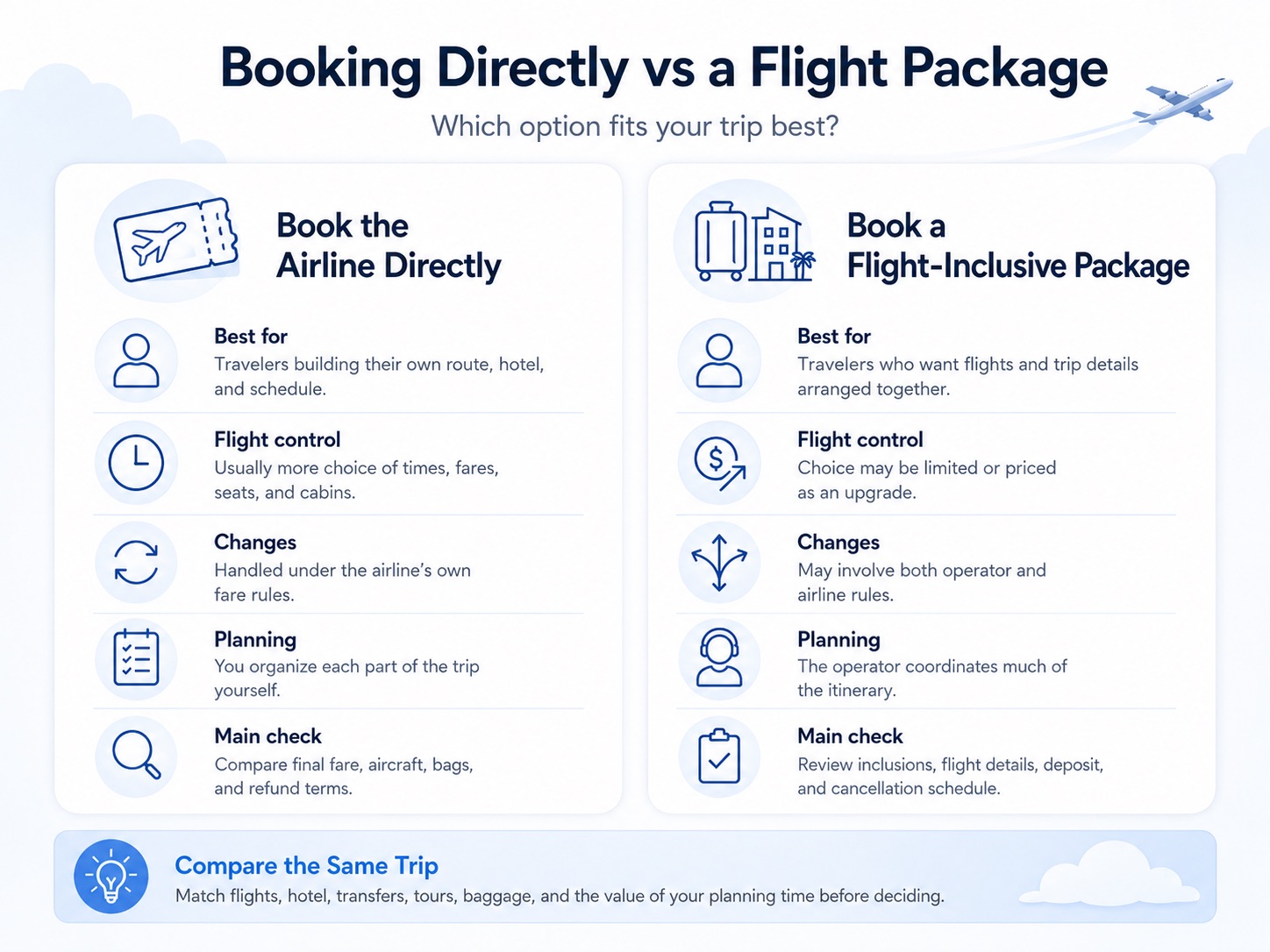
Booking Directly vs a Flight-Inclusive Tour Package
Booking an airline directly gives you more control over the exact flight and fare. A flight-inclusive package can reduce planning and place several parts of the trip under one reservation. Neither method is automatically better; the right choice depends on how much flexibility and organization you want.
| Factor | Book the Airline Directly | Book a Flight-Inclusive Package |
|---|---|---|
| Best for | Travelers choosing their own route, hotel, and schedule | Travelers who want flights, hotels, transfers, and activities organized together |
| Flight control | Usually more choice of times, fares, seats, and cabins | Choice may be limited by the package or priced as an upgrade |
| Changes | Handled under the airline fare rules | May involve both the tour operator and airline terms |
| Planning | You arrange every part of the trip | The operator coordinates much of the itinerary |
| Main check | Final fare, aircraft, baggage, and refund terms | Full inclusion list, flight details, deposit, and cancellation schedule |
When comparing the two, price the same trip as closely as possible. Include flights, hotels, transfers, tours, baggage, and the value of your own planning time. A package that looks more expensive at first may include several costs that are missing from an airline-only booking.
Final Verdict: Choose the Whole Journey, Not Just the Airline
The right international airline is the one that protects the whole trip at a price you are comfortable paying. Start with route and schedule, compare the complete fare, confirm the aircraft and cabin, read the baggage rules, and understand who will help if the itinerary changes.
A familiar logo, a few thousand miles, or the lowest headline price should not outweigh a poor connection or a fare that removes everything you need. Our recommendation: compare two or three realistic itineraries side by side, include every extra, and choose the option you would still feel comfortable taking if the trip became delayed or complicated.
Frequently Asked Questions
Is it better to book an international flight directly with the airline?
Booking directly can make communication simpler because the airline usually controls the ticket and payment. A reputable travel agent or tour operator can still be the better choice when it adds package protection, useful service, or a lower complete price. Check who is the merchant of record and who handles changes before booking.
Is a nonstop flight always better for long-haul travel?
No. A nonstop flight removes connection risk and is usually easier, but a one-stop route can offer a better schedule, lower total price, or stronger cabin. Compare the time saved with the price difference and the consequences of a missed connection.
How can I tell which aircraft will operate my flight?
Most airline and booking pages show the aircraft type in the flight details before payment. Check the airline seat map and cabin page for that aircraft. The airline may change the plane later, so treat the information as the planned product rather than a guarantee.
Is Premium Economy worth paying for on a long-haul flight?
It can be, especially on an overnight flight where extra space, recline, priority services, and baggage have real value. Compare the upgrade with regular Economy for the same flight and check whether it is a true separate cabin or only an extra-legroom seat.
What should I check before booking a connecting international flight?
Confirm that every segment is on one reservation, check the connection airport and terminal, allow time for immigration or security, and review what happens if the first flight is late. Avoid separate tickets unless the savings justify the additional risk.