Buying used golf clubs online sounds simple until you are staring at twelve versions of the same driver with different shafts, lofts, lengths and condition grades. A bargain is only a bargain if the club actually suits your swing — and if the photos, description and return policy give you enough confidence to click buy.
That is where 2nd Swing is more interesting than a typical second-hand marketplace. It combines a very large inventory with detailed filters, condition ratings, individual product photos, fitting services and a trade-in program. You can search for a specific left-handed driver or compare several generations of the same iron set without relying on a vague resale listing.
It is not friction-free. Used-equipment grading is still subjective, returns have rules worth reading, and independent customer feedback is mixed. But for golfers who like to research equipment, 2nd Swing gives you a lot of useful information before you spend.
For this 2nd Swing review, we checked the current shopping experience, condition guide, returns and warranty terms, trade-in program, fitting options and independent customer discussions. Our focus is the US online store and used golf clubs rather than apparel or accessories.
What Is 2nd Swing?
2nd Swing is a US golf retailer specializing in new and pre-owned equipment. It sells online and also operates physical stores in several US markets, with club fitting offered both in person and remotely. The inventory covers drivers, fairway woods, hybrids, iron sets, wedges, putters, shafts, complete sets and other golf gear.
The used side is what makes the site distinctive. Individual clubs are listed with their own specifications and condition grade, so two copies of the same driver can have different shafts, lengths, wear and prices.
For an experienced golfer, that detail matters because model name is only half the story: the wrong shaft can change how a familiar head performs. For a beginner, the amount of choice can be overwhelming, which makes the filtering and fitting tools more important.
The Biggest Strength: Selection With Real Specifications
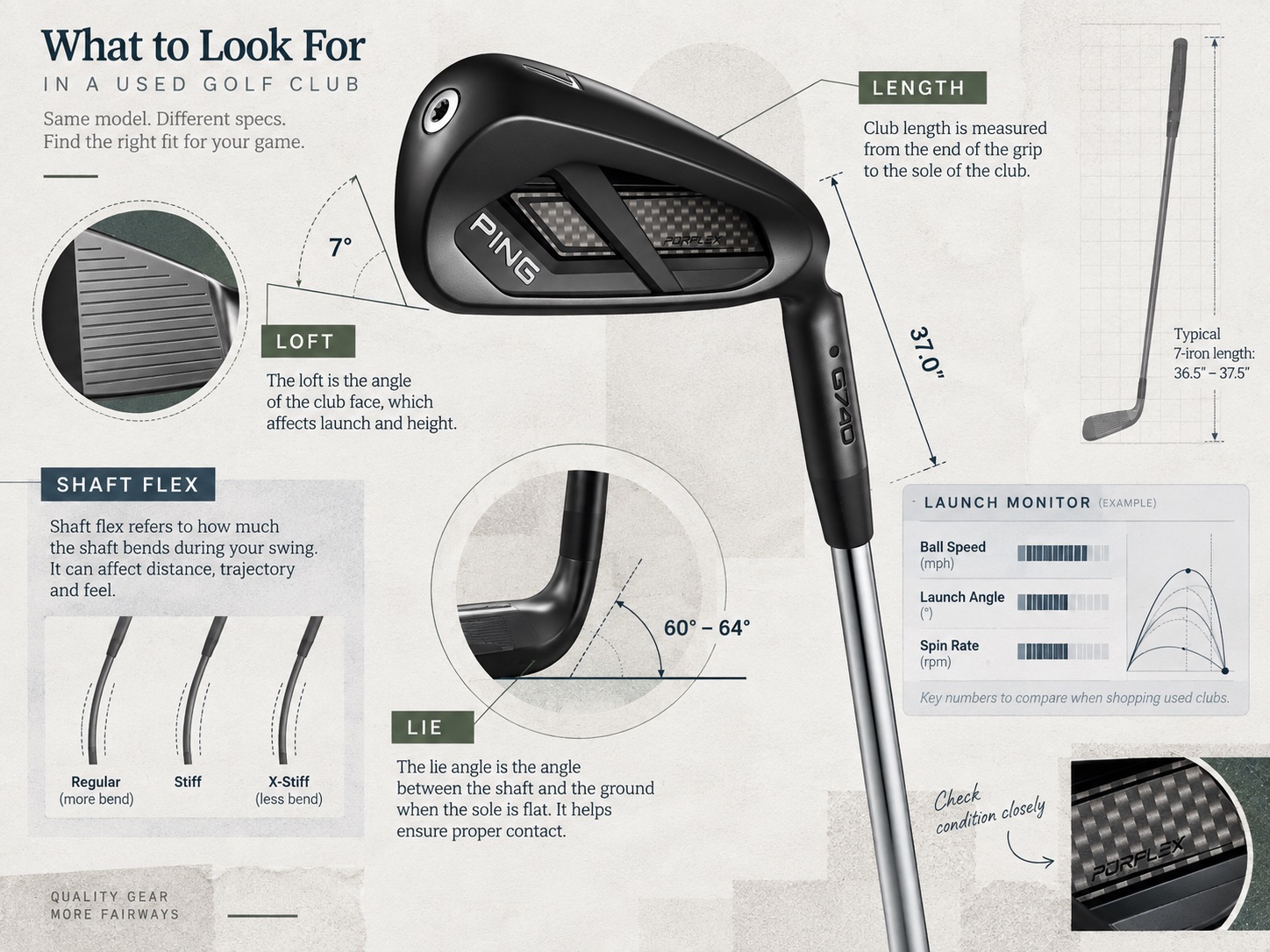
2nd Swing’s catalog is deep enough that you can shop by the things golfers actually care about: dexterity, loft, shaft flex, shaft material, shaft model, club length, condition, brand and price. Iron-set listings go further into set makeup, while putters can be filtered by length, head style and other build details.
That matters when you are replacing one club rather than a whole bag. Used inventory gives you a better chance of finding specific lofts, lengths, left-handed options and discontinued models that manufacturers no longer sell new.
It also suits golfers who already know they liked an older generation of equipment. Not every annual launch makes last year’s club obsolete; a well-fitted older driver can be a smarter buy than a current model that is wrong for your swing.
How 2nd Swing Grades Used Golf Clubs
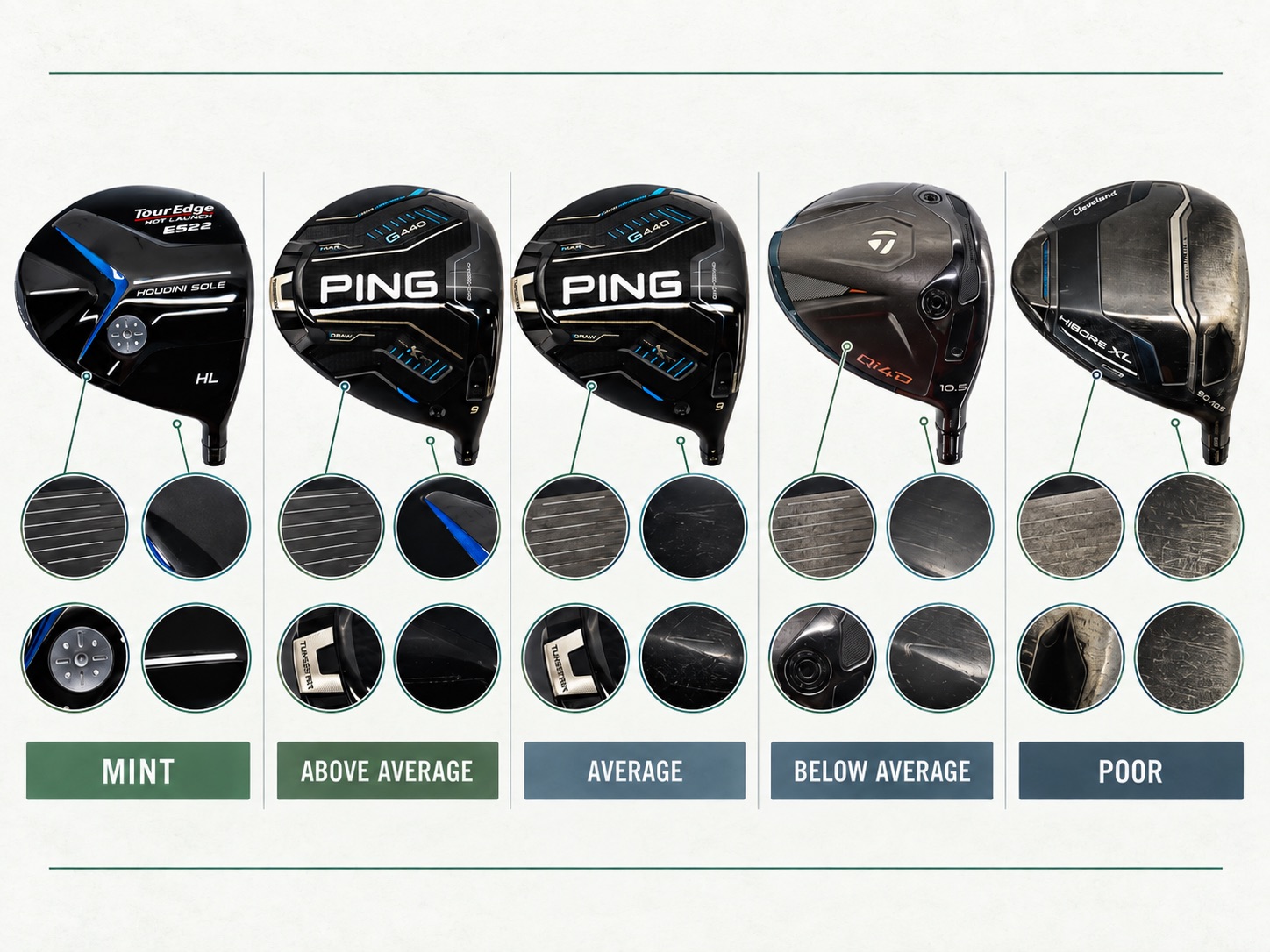
The condition system is one of the first things to learn. 2nd Swing uses a numerical scale, and the important part is that the grade describes wear rather than performance potential. A lower-rated club is not automatically a bad golf club; it is usually a more visibly used version of the same design.
The current guide runs from 10 for brand new through 9.5 Mint, 9 Above Average, 8 Average, 7 Below Average and 6 Poor. The company breaks the grade down by grip, shaft, face, sole and crown or topline depending on club type. A 9.5 wood, for example, should show almost no use, while an 8 can have visible ball marks, surface scratches and minor cosmetic imperfections.
We like that 2nd Swing tells buyers to use the photos as the final judge. Labels are useful shorthand, but photos reveal sky marks, face wear and bag chatter. Several golfers in a long-running Reddit discussion praised seeing the actual clubs and said purchases arrived as described, sometimes in better cosmetic condition than expected.
The practical lesson is not to shop by grade alone. Zoom in on the face and crown, check the shaft and grip, then read the specification line again. Five careful minutes before checkout can save a return later.
The 2nd Swing reliability discussion on Reddit is older, but it is unusually consistent: commenters repeatedly mention accurate photos, fair condition descriptions and repeat purchases. We would treat that as useful anecdotal evidence rather than a guarantee for every order.
What Should You Buy Used — and What Needs More Care?
Drivers and Fairway Woods
Drivers are a natural used buy because recent generations often remain competitive for years, and 2nd Swing usually gives you enough spec information to avoid buying blind. Pay special attention to loft, shaft model, flex and club length. Cosmetic sole wear rarely matters; cracks, dents or unusual face damage obviously do.
Adjustable heads are convenient, but check whether the listing includes the matching headcover or wrench if those matter to you. 2nd Swing notes that headcovers are not automatically included with every used club because trade-ins do not always arrive with them.
Iron Sets
Used irons can offer some of the strongest value, especially when a model is one or two generations old. The challenge is set makeup. A low price is less attractive if you expected 4-PW and the listing is actually 5-PW, or if you later have to hunt for a matching gap wedge.
Look at shaft material and flex, but also length and lie information where available. If an iron set has been modified for a previous owner, that can be either exactly what you need or a reason to keep scrolling.
Wedges
Wedges deserve more scrutiny because groove wear affects spin and control. A cosmetically tired driver can still perform perfectly well; a heavily worn wedge face can meaningfully change what you get around the green. We would generally pay a little more for a cleaner-condition wedge than chase the absolute cheapest listing.
Putters
Putters are easier to buy used from a wear perspective because they do not take the same impact abuse as wedges and drivers. Fit still matters, particularly length, head shape and how the putter works with your stroke. The used market is also one of the best places to find discontinued shapes and older premium models.
Fitting Is More Useful Than It Sounds
A large inventory solves the availability problem, but it creates another one: too many technically plausible choices. 2nd Swing’s fitting service is a genuine advantage if you are unsure about shaft flex, length, loft, lie or even which head category suits you.
The company offers in-store fittings, walk-in assessments, phone help and a virtual fitting option. Remote sessions can use swing information and launch-monitor data to narrow down head and shaft combinations. Not everyone needs that level of analysis, but a discounted club that does not fit is still wasted money.
Beginners do not need a spreadsheet of launch angle and spin rate. A fitting can start with height, typical distances, miss pattern, current clubs and budget; experienced golfers can bring launch-monitor data and get more specific.
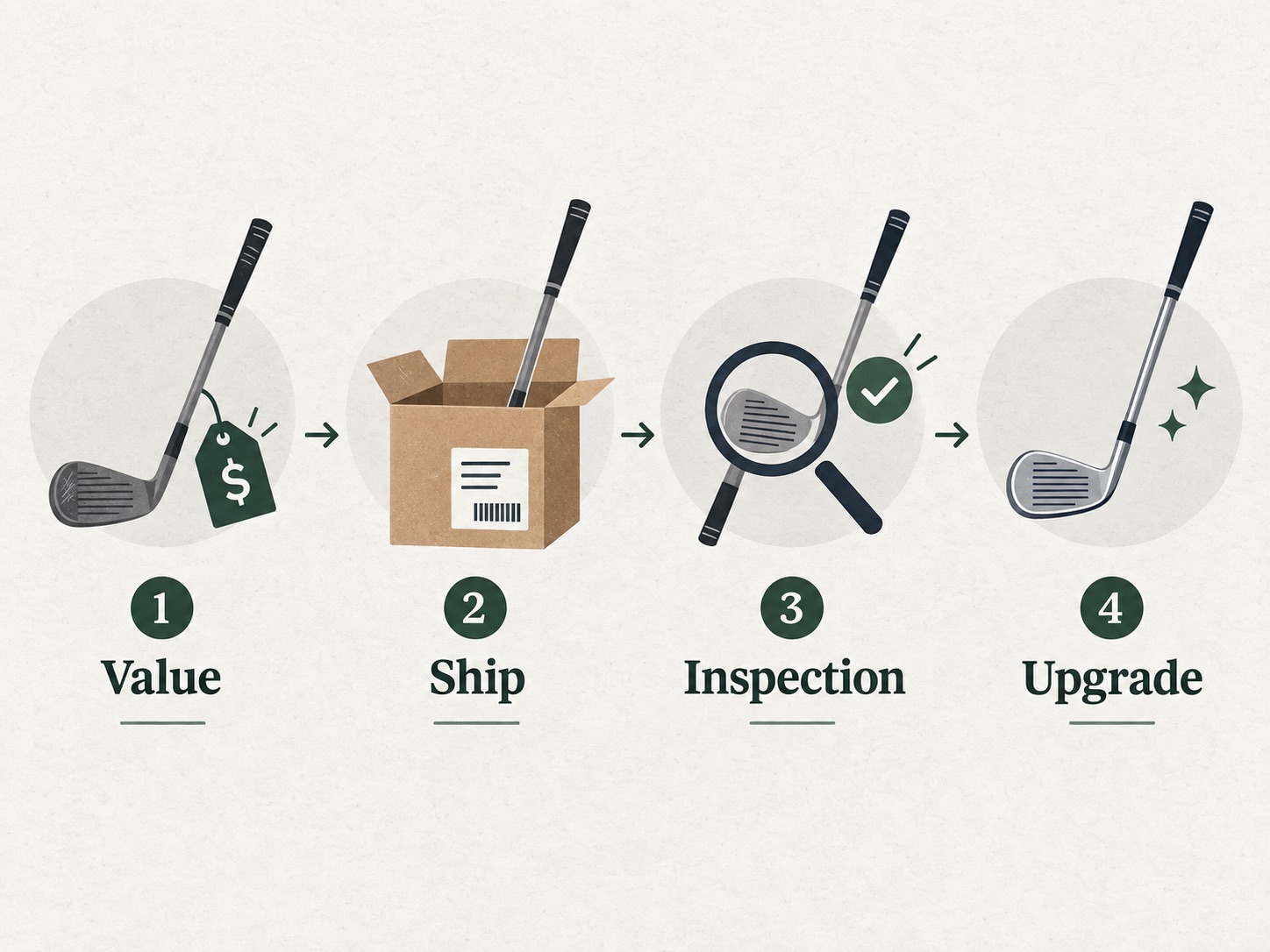
The Trade-In Program: Convenient, but Read the Valuation Rules
2nd Swing also buys clubs. Its online Value Guide provides an estimated value and lets you trade toward another purchase or sell outright, giving old equipment an obvious exit route when you upgrade.
Convenience is the appeal: no individual listings, buyer messages or negotiations. As with most retail trade-ins, you may exchange some potential resale value for speed and simplicity.
This is also one area where we would keep expectations measured. Independent customer feedback includes positive reports about fair trade values, but there are also complaints about final valuations changing after clubs were inspected and about communication during the process. Photograph the clubs before shipping, keep a record of the quoted value and read the condition rules before treating an estimate as cash already in your account.
Returns and Warranty: Better Than a Final-Sale Marketplace
One reason a specialist retailer is easier to recommend than a random marketplace seller is that there is an actual return structure behind the purchase. At the time we checked, 2nd Swing’s dedicated online return page listed a 60-day Play Guarantee for eligible merchandise, including used items, with refund or store-credit options subject to its rules and condition checks.
There are caveats. Return shipping is generally the customer’s responsibility unless 2nd Swing made an error, and repeated returns in the same club category can trigger restocking fees. Items also need to come back in the required condition. We noticed that some older FAQ copy still references a 30-day guarantee, so we would check the live return-policy page at the time of purchase rather than relying on a remembered number.
Used clubs also currently come with a 90-day limited warranty covering qualifying failures during normal play. Abuse, misuse and post-purchase alterations are excluded, and warranty claims are inspected before replacement or credit is approved.
Trustpilot feedback is mixed: some buyers praise fitting help, responsive staff and problem resolution, while others describe issues with shipping, condition expectations, trade-ins or returns. Rather than reduce that to one score, we would keep photos, order details and correspondence until you know the club is staying in the bag.
If you want to read the less curated side before ordering, the recent Trustpilot feedback for 2nd Swing shows both strong service experiences and frustrated customers, which is more useful here than quoting one headline rating.
Pricing: Is 2nd Swing Actually Cheap?
Sometimes. Not always. And that is probably the right expectation.
2nd Swing is not a peer-to-peer marketplace. You are paying for cataloging, grading, photography, customer support, returns, warranty coverage and fitting access, so a club can cost more than the lowest listing elsewhere.
Whether that premium is worthwhile depends on the item. On a premium driver, iron set or collectible putter, detailed photos and an established return process may justify paying a little extra.
We would compare the exact spec, not merely the model name. A cheaper driver with the wrong shaft is not the same deal. Likewise, a more expensive listing in cleaner condition may make sense if replacing a grip or fixing cosmetic damage would erase the saving.
2nd Swing Pros and Cons
What We Like
- Huge selection of used and new clubs across many generations and specifications.
- Detailed filters make it easier to find the correct dexterity, shaft, loft, length and condition.
- Individual product photos make used-condition shopping less abstract.
- Condition grades are backed by a fairly detailed published guide.
- In-store, phone and virtual fitting options add useful support for uncertain buyers.
- A formal return structure and used-club warranty reduce some of the risk of buying pre-owned equipment online.
- Trade-in tools make it easy to move old clubs on when you upgrade.
What Could Be Better
- The size of the inventory can be overwhelming if you do not already understand basic club specs.
- Condition grading is still subjective, so buyers should inspect every photo rather than trusting the label alone.
- 2nd Swing is not always the cheapest place to find a particular used club.
- Return rules include condition requirements, shipping costs and possible restocking fees.
- Some current and older policy pages do not always show the same Play Guarantee length, so checking the live terms before ordering is sensible.
- Independent feedback around shipping, trade-ins and service is mixed rather than uniformly positive.
Who Should Shop at 2nd Swing?
2nd Swing makes the most sense for golfers who want used-equipment savings without buying from an unknown individual seller. It is particularly useful for specific specifications, discontinued models, left-handed equipment and cleaner examples of older favorites.
It is also strong if you want help choosing. A golfer who knows the model but not the shaft can get more support here than on a basic resale marketplace.
Pure bargain hunters may find lower prices elsewhere, especially if they are comfortable evaluating clubs themselves and accepting more risk. And if you change your mind frequently, read the return rules carefully rather than assuming the Play Guarantee works like unlimited free demos.
Final Verdict: 2nd Swing Is Best When You Use the Information It Gives You
2nd Swing’s real advantage is not simply that it sells used golf clubs. Plenty of places do that. Its advantage is the amount of structure around the used purchase: specifications, condition grades, photos, filters, fittings, trade-ins, returns and warranty support.
That structure works best if you use it. Zoom into the photos, check shaft and length, read the set makeup and compare the used price with newer alternatives. If the specifications look like a foreign language, ask for fitting help before choosing on looks alone.
We would shop 2nd Swing for a specific used driver, iron set or putter when condition transparency and selection matter more than finding the absolute lowest price on the internet. The Reddit discussion we reviewed is reassuring on those core strengths; the more mixed Trustpilot feedback is a reminder to document the order and understand the policies around returns and trade-ins.
Used golf equipment should save money without turning every delivery into a mystery box. 2nd Swing gets closer to that goal than most anonymous resale listings, as long as you do the last bit of homework yourself.
Frequently Asked Questions
Is 2nd Swing legit?
Yes. 2nd Swing is an established US golf retailer with an online store and multiple physical locations. It sells both new and used equipment and publishes condition, return, warranty, fitting and trade-in information.
Does 2nd Swing show the actual used club?
Its condition guide tells shoppers to use the product photos to judge the club before buying, and golfers in the Reddit discussion we reviewed specifically praised seeing photos of the actual used equipment rather than relying only on stock images.
What do 2nd Swing condition ratings mean?
The current scale ranges from 10 Brand New through 9.5 Mint, 9 Above Average, 8 Average, 7 Below Average and 6 Poor. The grade reflects visible wear across areas such as the grip, shaft, face, sole and crown or topline.
Can you return used clubs to 2nd Swing?
Yes, eligible used clubs can currently be returned under the company’s Play Guarantee, subject to timing, condition and return-frequency rules. Because some older pages still reference different time periods, check the live return policy immediately before ordering.
Do used clubs have a warranty?
2nd Swing currently lists a 90-day limited warranty for used clubs covering qualifying defects or failures during normal use. Damage from misuse, abuse or later alterations is excluded.
Can you sell golf clubs to 2nd Swing?
Yes. Its trade-in Value Guide provides an estimated value, and customers can trade equipment toward another purchase or sell it outright. The final value can depend on inspection and condition.